
What is MMA: understanding this complete combat sport
The MMA, or Mixed Martial Arts, is intriguing more and more people in France and elsewhere. But behind this modern-sounding name lies a combat sport that draws on ancient traditions and has established itself today as a complete, spectacular, and regulated discipline. Behind three letters lies an entire universe: precise rules, techniques from around the world, and fighters who push their limits at every training session. When people search for "what is MMA", they are looking to understand the exact definition, the rules, the techniques, the equipment, but also why this sport is experiencing such a boom. Here is a comprehensive overview to understand what MMA really is, without beating around the bush.
What is MMA: definition and what the acronym means
MMA literally stands for mixed martial arts. MMA is an acronym from English: Mixed Martial Arts. The word "mixed" alone summarizes the identity of this discipline: allowing a fighter to use several martial arts in the same fight. Boxing, judo, karate, Brazilian jiu-jitsu, wrestling, and even muay thai are all represented, combining striking, throwing, submission, and choking techniques.
In the French language, the MMA acronym is used as is, without systematic translation. People used to talk about free fighting or free fight, terms that referred to a similar form before the term MMA became established in the sports dictionary worldwide. MMA is a masculine noun. Its definition refers to a complete combat sport where two fighters face each other using a wide variety of striking, throwing, and close-quarters techniques. It is not a fighting style in itself: it is a discipline in its own right, with its own rules, organizations, weight classes, and history.
From vale tudo origins to the UFC: how MMA was born
The history of MMA does not begin in an octagonal cage. It began much earlier. Even in antiquity, Greek pankration combined striking and ground fighting in the Olympic Games. But it was especially in the 1920s in Brazil that what would become modern MMA took shape, with vale tudo: a no-rules fighting style that pitted practitioners of different disciplines against each other to determine which was most effective. It was the Gracie family, and especially Royce Gracie, who popularized this idea by imposing Brazilian jiu-jitsu against heavier, more muscular opponents from other martial arts. The message was clear: technique and submission can overcome brute strength.
The global turning point came in 1993 with the creation of the Ultimate Fighting Championship (UFC) in the United States. Initially carried by the Semaphore Entertainment Group, then bought out and developed by Dana White, the organization transformed MMA into a structured professional spectacle. The rules were refined, weight classes were defined, and the New Jersey Athletic Commission established the unified MMA rules in 2000, a foundation of common rules that still serves as a reference for professional fights on American soil. MMA ceased to be perceived as a street fight and became a recognized combat sport, with its own codes and requirements. Other organizations contributed to this global evolution: Pride Fighting Championships in Japan, Bellator MMA in the United States. Today, the UFC remains the most publicized organization in the world, with events followed by tens of millions of fans across the globe.
What MMA means in France: from a banned sport to a recognized discipline
MMA in France has a history of its own. For years, professional fights were simply banned there. The sport existed at the amateur level, in gyms, discreetly. But no legal framework allowed professional matches to be organized on national territory. It was not until 2019 that the law changed, finally paving the way for the FMMAF (French MMA Federation) to structure the sport and host legal professional competitions under the aegis of a state-recognized organization. A turning point in the history of free fighting in France.
Metal Boxe played a symbolic role during this pivotal period by sponsoring the first legal professional MMA event in France, held at the Palais des Sports in Vitry-sur-Seine on October 8, 2020. A historic moment for mixed martial arts in France. Since then, the sport's popularity has continued to grow. The first UFC Paris in 2022 marked a new turning point, highlighting French athletes like Ciryl Gane or Manon Fiorot in front of their fans. France is becoming an MMA nation. It is only just beginning.
What is allowed and what is not in an MMA fight

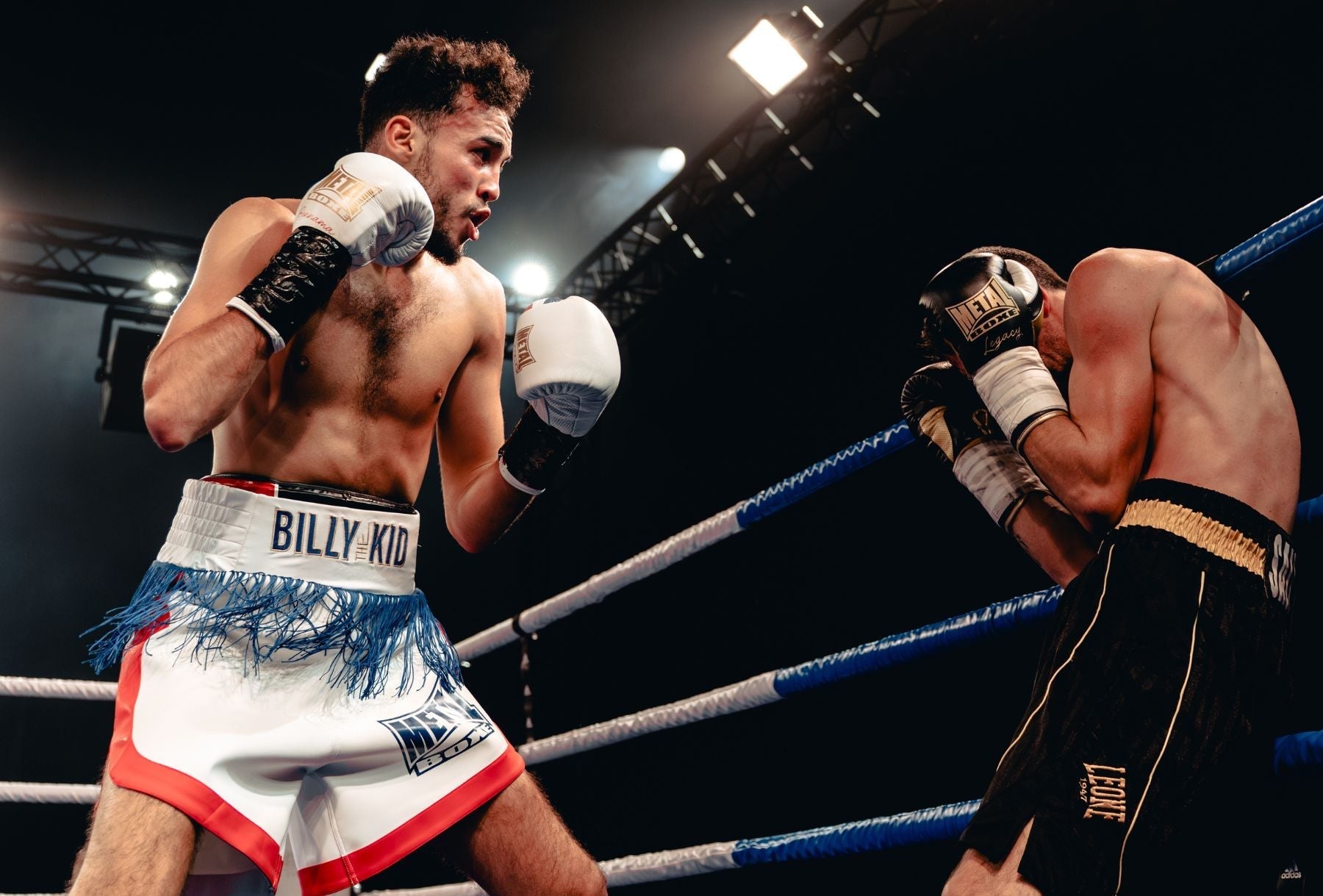
MMA is not a no-rules fight. This misconception is hard to shake, but it is false. An MMA fight generally takes place in a cage (the UFC octagon has become iconic), sometimes in a ring depending on the organization. Fighters face each other in matches divided into rounds, with a time limit that varies depending on the competition. The sport is governed by a precise framework, with a referee, judges, and strict rules on what is allowed and what is not.
Allowed techniques
In an MMA fight, both opponents can use a very wide range of techniques. Punches, kicks, knee strikes, elbow strikes, and throws are all allowed. The fight can take place standing or on the ground ("ground and pound" refers to strikes delivered to a downed opponent). Submissions (chokes, joint locks) are also allowed: the opponent can tap out by tapping the ground or verbally surrender. It is this technical freedom that makes MMA a combat sport that is as complete as it is demanding.
Forbidden techniques
Certain techniques are strictly forbidden for safety reasons. Strikes to the back of the neck, biting, groin strikes, fingers in the eyes, or strikes on an opponent in certain ground positions are prohibited. A referee can stop the fight at any time to penalize an illegal strike or protect a fighter in difficulty. The rule exists so that the fight remains intense, not so that it becomes uncontrollable.
Possible outcomes of a fight
An MMA match can end in several ways: by KO (the fighter is knocked out), by TKO (the referee stops the fight when the fighter can no longer defend themselves), by submission (voluntary surrender), or by decision of the judges if the time limit is reached. The decision can be unanimous (all three judges agree) or split. Draws exist, but remain rare. Each outcome tells a different story of the fight.

Lightweight, heavyweight, flyweight: how MMA fighters are classified
As in boxing, MMA fighters are divided into weight classes to ensure fair matches. There are flyweight, featherweight, lightweight, welterweight, middleweight, or heavyweight classes. The UFC offers several divisions ranging from flyweight (up to 56.7 kg) to heavyweight (over 93 kg). The best known remain lightweight (70 kg), featherweight (66 kg), bantamweight (61 kg), and heavyweight.
The women's category took time to establish itself, but it is now an integral part of the landscape: the first champion of the UFC opened a path that many female fighters have followed since. Each athlete must pass the official weigh-in to confirm their place in the category. The margins are sometimes just a few hundred grams, which requires physical preparation and careful management of diet and hydration. Exceeding the weight limit means risking the cancellation of the fight.
Boxing, judo, jiu-jitsu: the disciplines behind MMA
MMA is not invented. It is built. The specificity of MMA is to integrate fighting techniques from several martial arts. An MMA fighter does not master a single discipline: they combine several to create their own fighting style.
Striking combines strikes from boxing (jab, cross, hook, uppercut), muay thai (knee strikes, elbow strikes, kicks, sweeps), and karate for striking precision and distance management. Throws, inherited from judo and wrestling, allow for close-quarters control and to take the opponent down. Submissions (arm locks, chokes, joint locks) are inspired by Brazilian jiu-jitsu, popularized by the Gracie family. Finally, ground and pound is a method specific to MMA: strikes delivered on the ground to dominate and attempt a TKO stoppage.
There is no universal style. Each athlete builds their game from their strengths, their build, and their ability to move from one fighting area to another (standing, mid-range, ground) without losing control or initiative. Some fighters also incorporate elements of French boxing for their leg agility and sense of positioning. To train in good conditions, each fighter starts by choosing their MMA gloves: equipment that determines both hand protection and freedom of movement on the ground.
The octagon: the cage that defines MMA
The octagon is the visual symbol of MMA. This eight-sided octagonal cage, surrounded by a chain-link fence, was popularized by the UFC and has become inseparable from the sport in the collective imagination. Fights take place there on a surface covered with stretched canvas, and the cage itself is an integral part of the game: fighters use it to block their opponent, lean against it, or push them off. It is not just a ring. It is a fighting tool in its own right. Other organizations use more traditional square rings, but the octagon remains the form most associated with professional MMA. The standard UFC surface measures about 9 meters in diameter: large enough to allow all fighting styles, enclosed enough so that no distance is ever truly safe.
What equipment is used in MMA to ensure safety
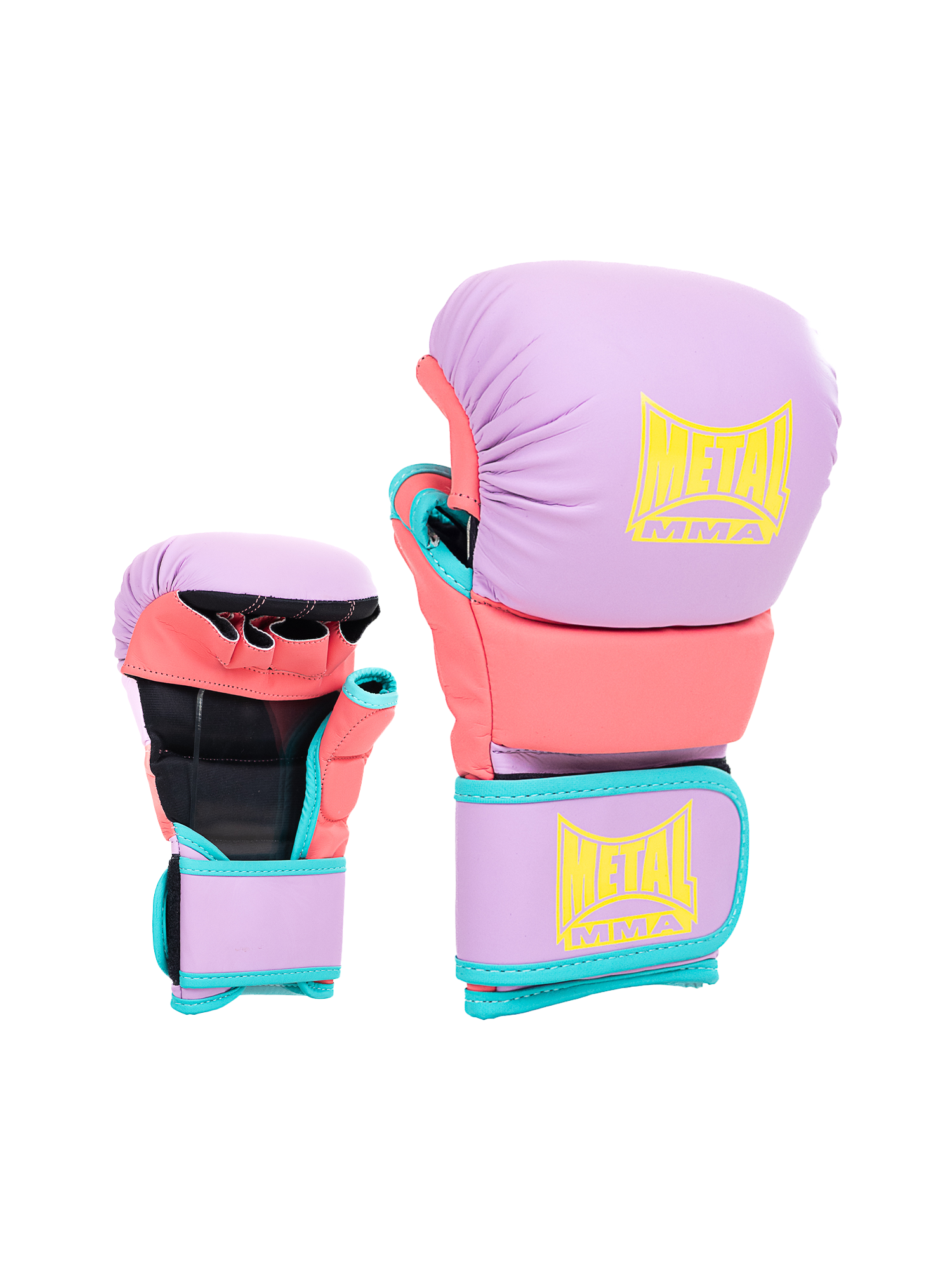
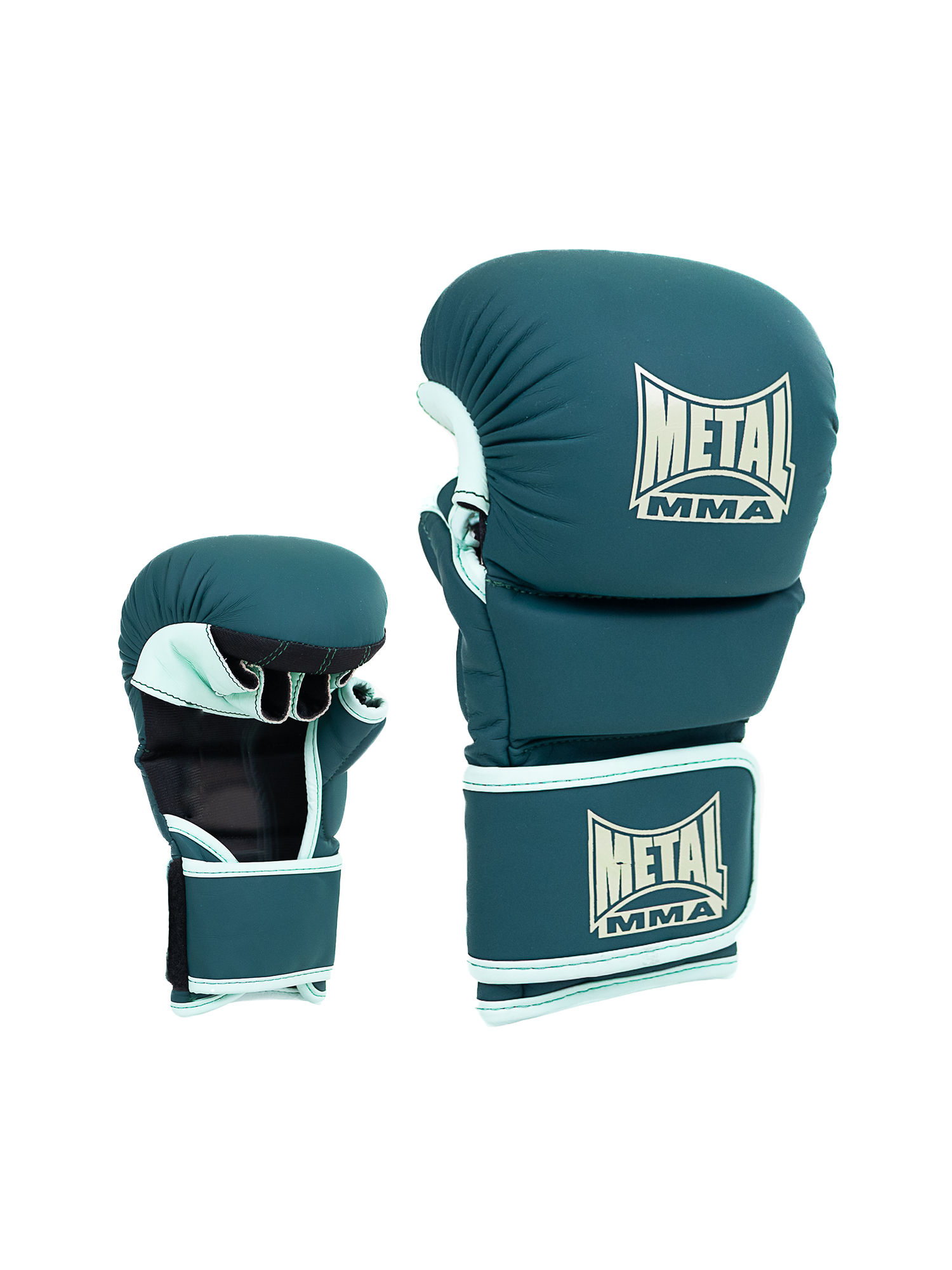
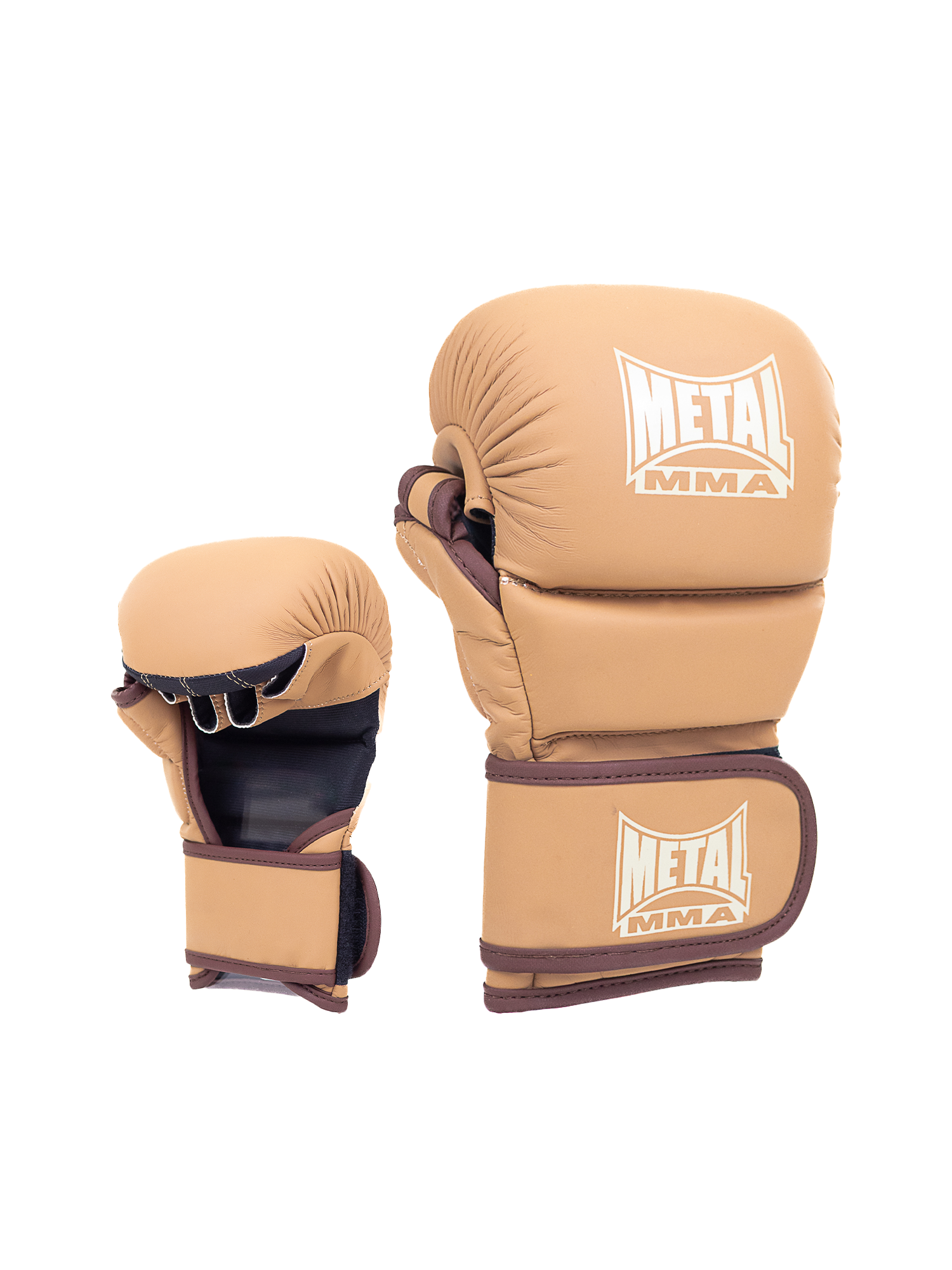
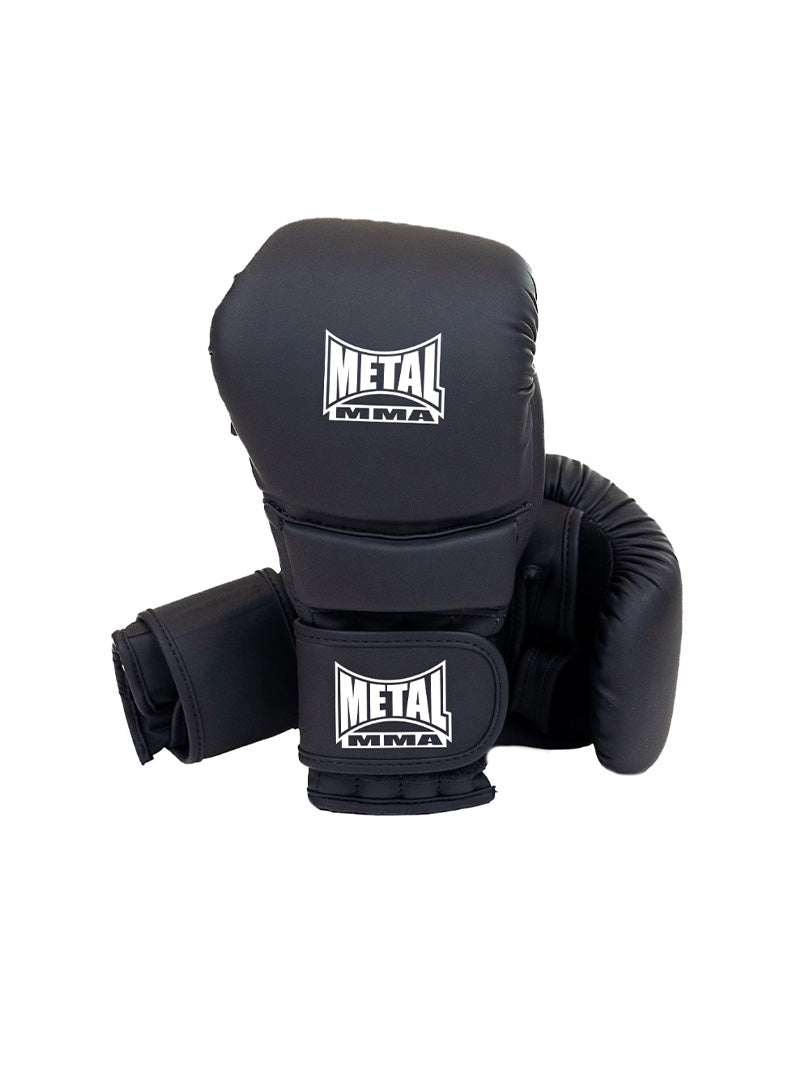
Equipment plays a fundamental role in training in good conditions. MMA gloves are more open than boxing gloves, leaving the fingers free to grab and attempt throws or submissions. MMA protection makes up the foundation of all serious equipment: a helmet, cup, and mouthguard are worn from training. Shin guards and boxing wraps complete the set to limit risks to the lower limbs. For clothing, a good MMA short offers the freedom of movement necessary for throws and ground work.
At the gym, coaches insist on protection and respect for the rules. The fighting areas must be compliant to avoid any danger related to the surface. The goal is clear: to train in good conditions to progress without endangering your health. Equipment does not make the fighter, but it allows them to progress a little more every day.
Gracie, McGregor, Gane: the athletes who forged MMA
Some names built MMA as much as MMA built them. Royce Gracie is a founding figure: his victories in the early UFCs proved that Brazilian jiu-jitsu could dominate opponents from radically different disciplines. Ken Shamrock, one of the first big names in professional fighting, helped give the sport its first media dimension.
Anderson Silva, former UFC middleweight champion, is often cited among the greatest MMA fighters of all time. His nearly seven-year reign at the top and the surgical precision of his strikes marked an entire generation. Jon Jones, considered by many to be the most complete in history, dominated the welterweight category for over a decade. Khabib Nurmagomedov ended his career undefeated, imposing an relentless wrestling and grappling style that no one could counter. Conor McGregor transformed MMA into a global mass phenomenon thanks to his sharp personality and his simultaneous conquest of the featherweight and lightweight titles at the UFC.
On the French side, Ciryl Gane opened the way in the heavyweight category, with cardio and a physique that distinguish him on the world stage. Francis Ngannou, although Cameroonian, built a large part of his career in France before becoming UFC world champion. Manon Fiorot carries the French colors among women with a record that commands respect. Each generation brings its legends, and the public passionately follows these careers made of victories, defeats, and spectacular comebacks.

Learning MMA: how to start and equip yourself properly
MMA is learned. It is not improvised. Today, it is possible to train in many clubs in France. The FMMAF lists a large number of practitioners and gyms offering classes for beginners as well as experienced athletes. The training of an MMA fighter, at the crossroads of several martial arts, rests on two pillars: a base in grappling (wrestling, judo, or Brazilian jiu-jitsu) and a base in striking (boxing, muay thai, or kickboxing). Without these two foundations, it is impossible to hold your own in all areas of a fight.
A typical workout includes technical work, controlled sparring with a partner, intensive cardio training, and physical strengthening. Self-control and stress management under pressure are part of the practice just like techniques. Competing requires a license, medical follow-up, and complete preparation. But many also choose to train to stay in shape, develop their physical condition, and enjoy the variety of techniques. Coaches supervise to avoid excesses and adapt the progression to each person's level.
Why MMA attracts so much, and what are its risks
The success of MMA rests on several factors. First, the spectacular dimension: every fight can turn at any moment, whether by KO, TKO, submission, or decision. The public sees an intensity rarely equaled. Next, the tactical richness: a fighter must read their opponent, anticipate, vary angles, mix strikes, throws, and ground work. The spectator discovers a sport that gives no respite. Finally, the prestige of major organizations like the UFC, which organize events bringing together millions of fans. In France, the first UFC Paris in 2022 marked a historic turning point, with French athletes like Ciryl Gane or Manon Fiorot highlighted in front of their fans. The media coverage carried by social networks and YouTube has considerably accelerated this global popularity.
But MMA is not without risks. It is a demanding contact sport, which exposes fighters to real injuries: concussions, fractures, tears, cuts. Serious organizations and national federations have put in place strict safety protocols to reduce these dangers as much as possible: trained referees, doctors at the side of the cage, clear fight stoppage rules. Practicing MMA as an amateur in a supervised framework presents a level of risk comparable to other demanding combat sports like boxing or rugby. The condition: suitable equipment, a qualified coach, and respect for your own progression. MMA rewards those who take the time to learn it properly.