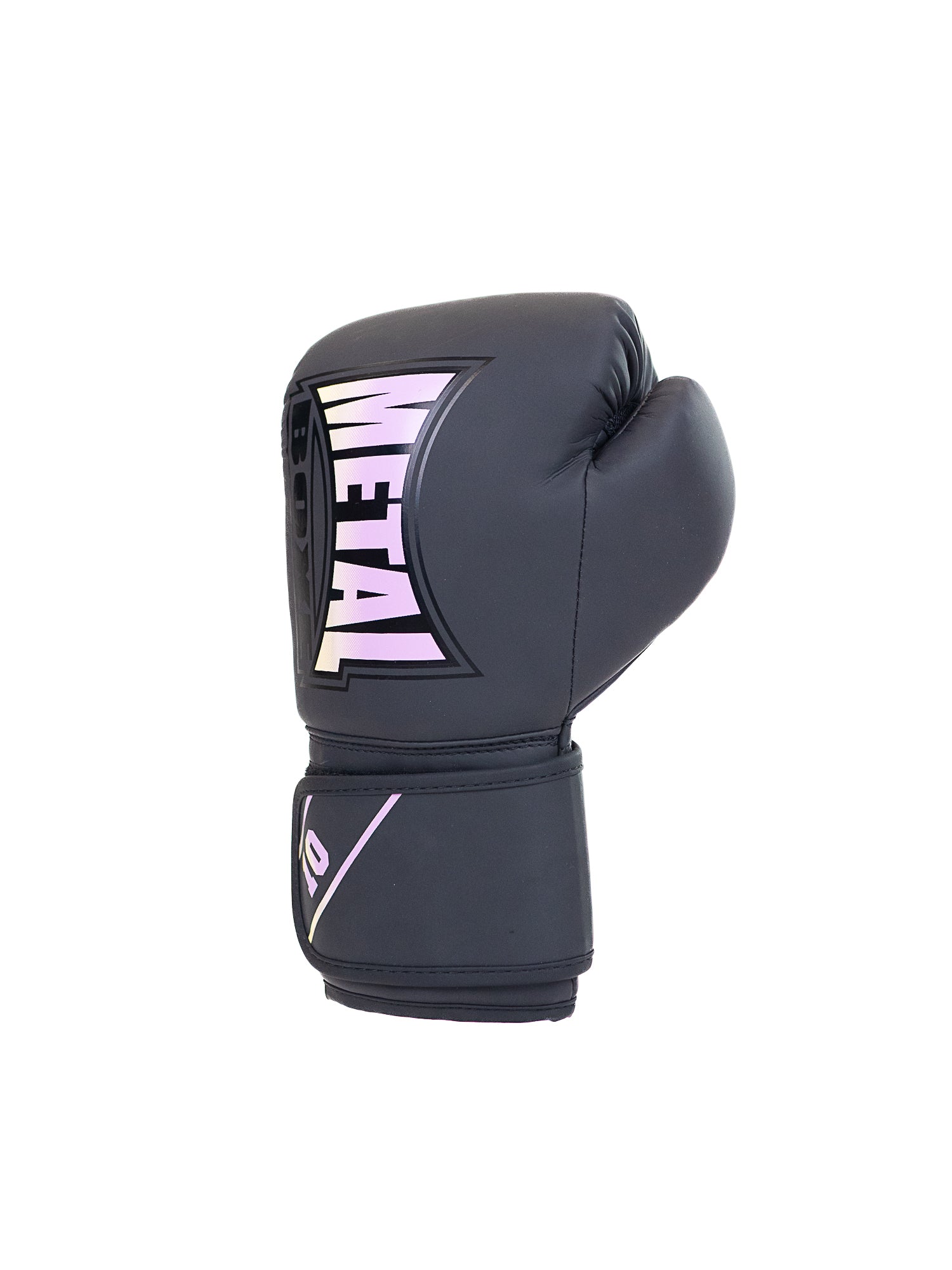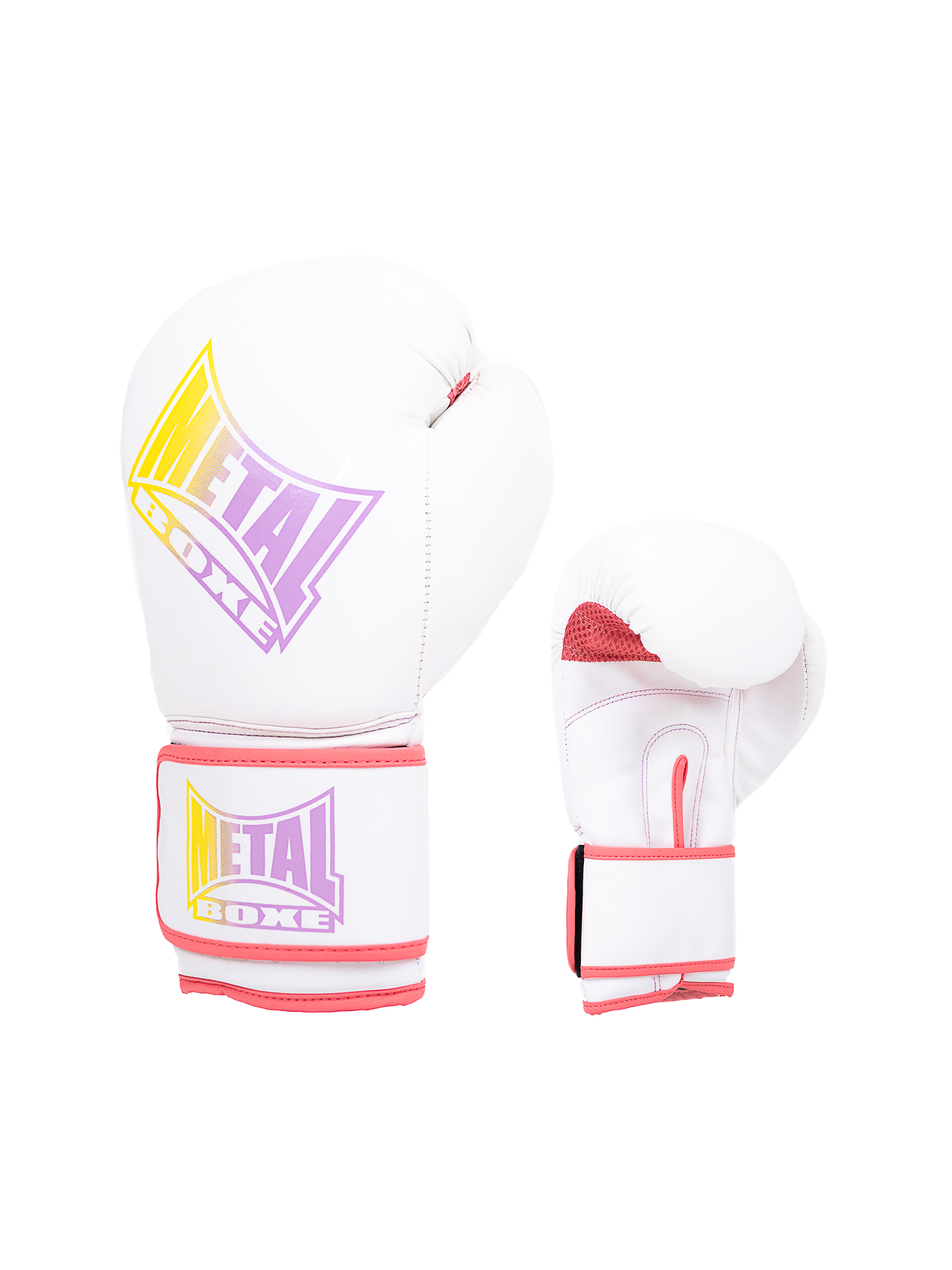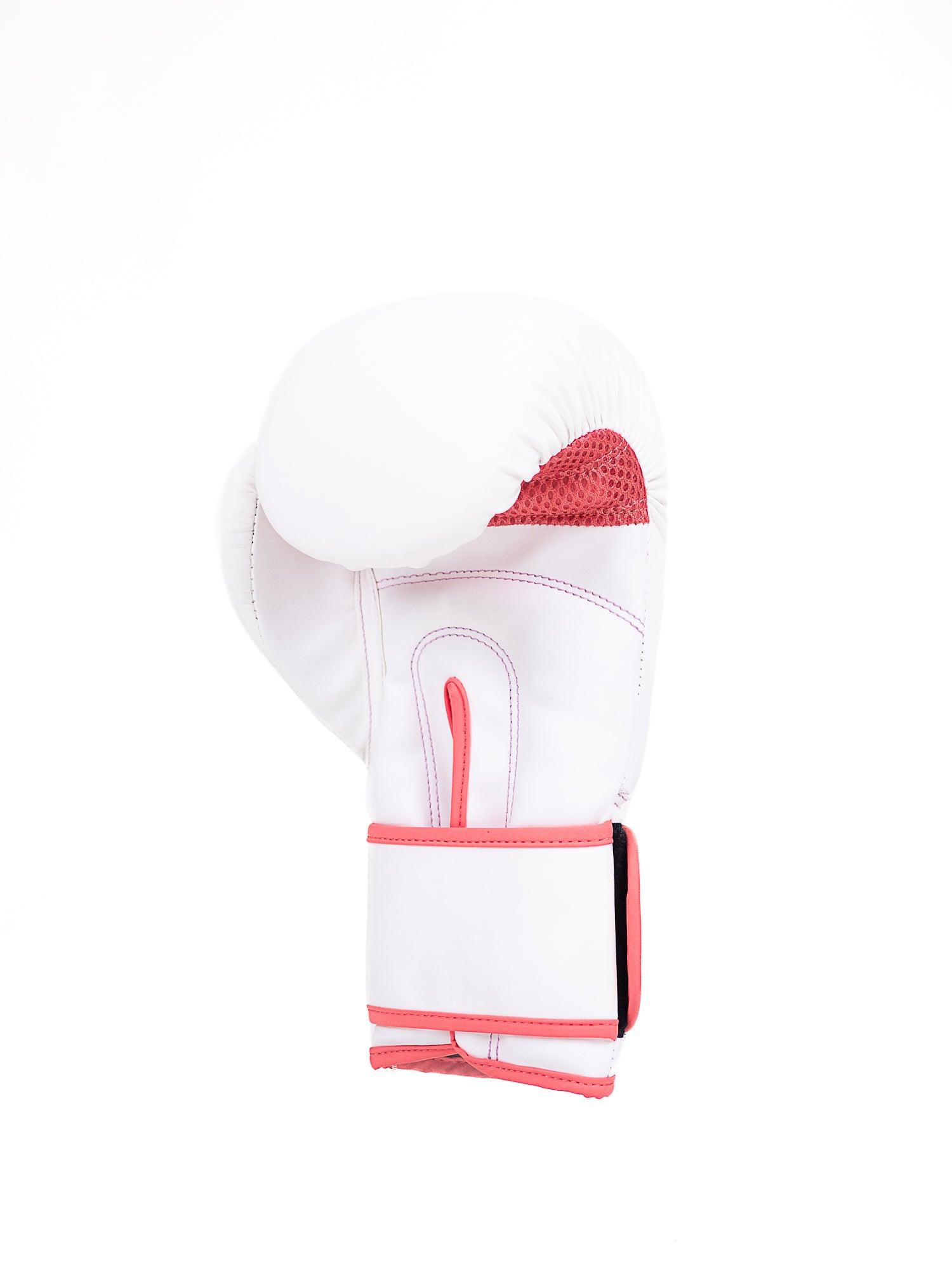

Women's Boxing Glove Size: The Complete Guide to Choosing the Right Pair
A glove that floats. A poorly supported wrist. A punch on the bag, and the pain arrives. Not after ten sessions. From the first. The size of women's boxing gloves is not chosen by instinct or by the color of the model. It is calculated. It is measured. It adapts to your body weight, your hand morphology, and the type of practice you have. Heavy bag, sparring, competition, cardio boxing: each use has its requirements. Many female boxers start with unsuitable gloves, too wide inside, poorly fitted to the wrist, and progress more slowly, sometimes at the cost of injuries that could have been avoided. This guide corrects that. Precise figures, concrete criteria, no unnecessary details. Here is how to choose your boxing gloves when you are a woman and you want to do things right.
Women's boxing gloves are not sized S/M/L
Forget sizes S, M, or L. Boxing does not work like that. Glove size is expressed in ounces (oz), a unit inherited from the British imperial system. One ounce is equal to 28.35 grams. This figure does not represent the physical size of the compartment: it indicates the amount of foam and padding contained in the glove. The higher the ounce, the heavier the glove, the more generous the protection. The common sizes for female adult practice range from 8 oz to 16 oz, with steps at 10, 12, and 14 oz that cover most situations. This system is precise. It is universal. And once understood, it makes the choice much simpler than it seems.
What the ounce does not say, however, is whether the hand cage (the inner compartment of the glove) matches your morphology. That is where the real difference between a women's boxing glove and a unisex or men's glove lies. The female hand is statistically narrower: the fingers are thinner, the palm less wide, the wrist less bulky. In a glove calibrated for a male hand, there is still room inside. On a heavy bag, this micro-movement is repeated hundreds of times per session. Eventually: tendonitis, metacarpal pain, wrist instability. Models designed specifically for female boxing incorporate a reduced hand cage to correct this. This is not marketing. It is anatomy.
What glove weight according to your build?
The fighter's weight remains the starting point. Not the hand size, not the shoe size, not intuition. Weight. A heavier boxer generates more powerful punches, which requires more substantial padding to protect her joints and not injure her training partner. The equivalences below are the recognized benchmarks in boxing clubs and validated by the French combat sports federations.
The reference table by weight
- 8 oz : weight of 35 to 45 kg (very light builds, amateur competition in certain categories)
- 10 oz : weight of 45 to 55 kg (bag training, technical work, cardio boxing)
- 12 oz : weight of 55 to 65 kg (versatile, bag and light sparring)
- 14 oz : weight of 65 to 75 kg (regular sparring, intensive training)
- 16 oz : weight of over 75 kg (heavy sparring, maximum protection)
These figures are starting points, not dogmas. A 58 kg boxer who spars three times a week has an interest in taking 14 oz rather than 12 oz. A 62 kg practitioner focused on technique on the bag can stay in 10 oz to gain execution speed. The type of training always modulates the final choice. A table indicates the direction. Practice confirms or refines. For beginners, the reflex to adopt from the start: in case of doubt between two sizes, take the larger one. It is better to start with a slightly heavier glove than to damage your joints from the first weeks.
How to measure your hand before buying your gloves
Weight gives the direction. Hand measurement refines the result, especially for atypical morphologies. A flexible measuring tape is enough. Wrap it around the palm, just below the joints of the four fingers, excluding the thumb, without tightening. The value obtained is the hand circumference. Below 15 cm: female hand cage essential. Above 18 cm: unisex models are suitable. Between the two, specific women's boxing gloves remain the safest choice to guarantee real wrist support without play in the compartment. Are women's boxing gloves really different from men's gloves? Yes, and it is precisely this narrower hand cage that makes all the difference: it fits statistically thinner hands and prevents the repetitive micro-movements responsible, eventually, for tendonitis and metacarpal pain.
This measurement is also used to anticipate the space taken by the wrap. A good glove is never put on with bare hands. The boxing wraps add between 5 and 8 mm of volume around the phalanges and the wrist. A perfect glove with bare hands becomes too tight once the wraps are put on. The rule: always try your gloves with your wraps. The glove must hold the hand without compressing the fingers, allow the fist to close fully, hold the wrist without blocking flexion. If one of these three points is off, it is not the right size.
Bag, sparring, competition: what glove for what practice?
Same build. Different uses. Different sizes. This is not an eccentricity of an advanced practitioner: it is the reality of practicing boxing from a certain level. The role of the glove changes whether you hit a fixed bag, exchange with a partner, or get on the ring in competition. Ignoring this means progressing more slowly and getting injured more often. Can the same gloves be used for the bag and sparring? Technically yes. In practice, it is an error that regular practitioners all regret. Two distinct pairs, it is an investment in your progress and your safety.
For the heavy bag
Bag work calls for light and reactive gloves. Between 10 and 12 oz for the majority of boxers under 65 kg. The goal: feel the impact, string together combinations without overloading the shoulders, develop the speed and precision of punches. A glove too heavy on the bag unnecessarily fatigues the forearms and breaks the rhythm of combinations. Wrist support remains a priority even here: a poorly held wrist during a slightly deviated punch can cause a clear sprain. The Metal Boxe training gloves incorporate a reinforced velcro closure system precisely for this. Fast to close. Effective at holding. Session after session.
For sparring
14 oz minimum. Without exception. This is the rule in almost all boxing clubs in France, and it does not suffer any compromise. The extra padding absorbs the shocks of punches received on the forearms, the helmet, the partner's hands. A glove too light in sparring is a potential injury on both sides. Some gyms go up to 16 oz for the most intense sessions or the heaviest builds. In sparring, we do not negotiate with the safety of training. Never.
For competition
In women's amateur boxing, federations impose regulatory sizes according to weight categories. In boxing, the standard is generally 10 oz in competition, whatever the category. Some light women's competitions use 8 oz. The principle is always the same: competition weight is lower than training weight. Lighter and tighter gloves increase the impact of punches and accelerate the pace of exchanges. At training, always go up one size compared to what you wear on the ring.
For muay thai, kick boxing, and MMA
Muay thai (also called Thai boxing) and kick boxing use gloves with more developed padding on the back of the hand. This extra protection compensates for the parries of kicks that hit the back of the hand. Wrist support is also slightly more flexible there to facilitate arm grabs. Sizes remain similar (10 to 16 oz depending on weight and practice), but the shape of the glove differs. As for MMA gloves, they work differently: open on the fingers, very light (4 to 6 oz in competition), designed for grabs and grappling. They are not boxing gloves. They are not interchangeable.
Padding, material, closure: what makes a good glove
The size in ounces opens the door. The quality of the glove determines what you find behind. Padding, material, closure system: three points that condition the protection of the hands, comfort during training, and the lifespan of your equipment.
Foam and padding: what really absorbs punches
The foam of a boxing glove absorbs impacts to preserve the joints on both sides. Entry-level gloves use single-layer foam: sufficient for light or occasional practice, but quickly insufficient in the face of intensity. Quality models incorporate a multi-layer foam with different densities depending on the zones. Softer on the surface so as not to injure the partner, denser at contact with the hand to dissipate the energy of the punch. Look for the mentions "triple density foam" or "multi-layer padding" in the product sheets. These are concrete indicators, not empty sales arguments. A 12 oz glove with dense and compact foam protects better than a 14 oz with soft padding that quickly deforms.
Material: genuine leather, synthetic leather, or polyurethane?
The genuine leather remains the reference. It gradually deforms to fit the shape of the hand, breathes well, resists intensive sessions for years. It is the choice of regular practitioners and fighters of confirmed level. Synthetic leather (polyurethane synthetic) offers an excellent quality/price ratio for beginners and intermediate levels: lighter, easier to maintain, cheaper to buy. The lifespan is shorter, but for two to three sessions a week, the compromise is perfectly reasonable. Avoid pure vinyl as soon as training becomes regular. It does not ventilate, wears out quickly, and offers frankly insufficient protection over time.
Velcro or laces: the closure system that holds the wrist
Velcro closure dominates the clubs. It sets itself, without external help, adapts to each wrist morphology, and is removed in two seconds between rounds. It is the obvious choice for daily practice and the reference training glove at all levels. Laces offer a more precise, tighter support, favored by some professional fighters in competition. But impossible to close alone. Except for specific competitive use and with a coach available, velcro wins every time.
The mistakes to avoid when buying your boxing gloves
First mistake, the most widespread: buying men's gloves one size down to compensate for the difference in build. The hand cage keeps its masculine proportions. Only the padding decreases. Result: less protection, hand always poorly fitted, and the problem of play inside persists. Second mistake: trying the glove with bare hands. Without wraps, everything seems perfect. With wraps, the glove compresses. Third trap: choosing a new glove that fits too easily. A good glove must be slightly tight at purchase. The foam will compress with use, the glove will gradually open. A glove that floats from the first try will be much too loose after twenty sessions. Last classic pitfall: using the same gloves for the heavy bag and sparring. The two uses do not have the same requirements. Two distinct pairs, it is an investment in your progress and your safety.
Store or online: where to buy your gloves?
In a physical store, the advantage is being able to try the glove with your wraps, feel the real support, check that the fingers reach the bottom of the compartment. It is the ideal condition for a first purchase. Online, free shipping and access to a wide catalog allow you to compare easily. At Metal Boxe, each product sheet includes a precise size guide according to use and build. Some models offer specific women's sizes, indicated directly on the page. If a women's size is not mentioned on the sheet, the model does not exist in this format. No need to order hoping it will fit. Another point on the purchase: do not choose your gloves solely by color. The market offers many models in so-called "feminine" colors that do not correspond to any technical specificity. What matters is the hand cage, the quality of the foam, the closure system, and the weight in ounces. Color comes after. The Metal Boxe women's boxing glove selection covers all practices, from cardio boxing to competition, with materials tested to last.