Ground and Pound in MMA: A Complete Guide
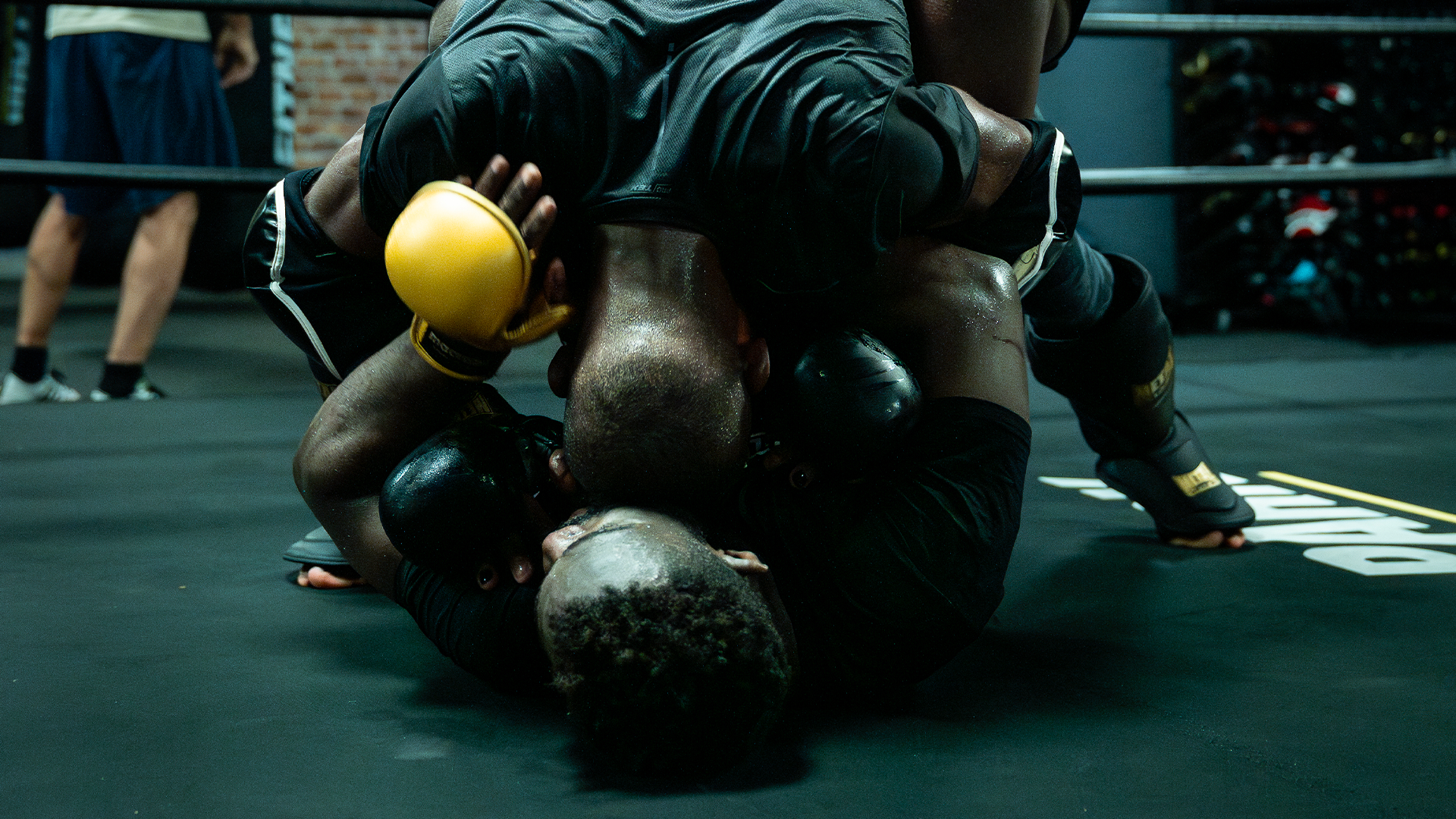
Ground and pound remains one of the most formidable pillars of modern MMA. At the crossroads of grappling and striking, this ground striking technique, performed with MMA gloves, involves holding an opponent on the ground while inflicting powerful strikes, usually with fists, elbows, or knees, depending on the organization's rules. Since the early days of mixed martial arts, this approach has marked decisive moments in fights. From Mark Coleman to Fedor Emelianenko, and Tito Ortiz, the greatest champions have mastered this phase of combat to assert their dominance. Here is an expert guide to understanding, practicing, and integrating ground and pound into your MMA training.
Where ground and pound came from and how it changed MMA
The term "ground and pound" emerged in the 1990s. At the time, wrestling was dominant but not very spectacular. It was Mark Coleman who changed everything. He took his opponents to the ground… and he struck. Hard. Regularly. Without giving them a choice. At UFC 10, he imposed this strategy, forced stoppages, and made history. MMA shifted. The public discovered a new form of organized violence. The pound became a code. A threat. A method.
Since then, the technique has been refined. It has endured through the years. The rules have evolved, but the logic remains the same: hold the opponent on the ground and strike until they submit. From holds barred combat to modern MMA, ground and pound establishes itself as a signature of mixed martial arts.

How ground and pound works and why it is so effective
Striking while standing, anyone can try. Striking on the ground, without being reversed, without being submitted? Now, we're talking about real fighters. Ground and pound leaves no room for improvisation. It's a game of dominance. A build-up of pressure. A test of clear-headedness as much as technique.
Are you on top? Perfect. You must stay there. Your hips must cut off space. Your posture must break their attempts. Your strikes must open, break, wear down. Full mount is the dream position: your knees lock their flanks, your fists strike without restraint. But even half-guard can become a striking zone, if you know where to press.
A good practitioner doesn't get excited. He reads. He feels. He strikes. He waits for the reaction. He adjusts. He doesn't strike to make noise. He strikes to silence.
Which areas to target to make ground and pound truly dangerous
The head? That's the showcase. The body? That's the engine. Ground and pound requires choosing. A strike to the liver slows them down. An elbow to the forehead opens them up. Each blow must have a purpose. Your opponent drops their guard? Aim for the chin. They cross their arms? Chain strikes to the ribs. They turn? Find the temple.
Striking on the ground means forcing the referee to intervene. Not necessarily with power. With regularity. With precision. You alternate? They doubt. You aim? They let go. You maintain the pace? The referee stops it.
Which positions offer the best strikes in ground and pound
Not all positions are equal. Here are the ones that give you real striking power:
- Full mount: total domination, downward punches and elbows.
- Half-guard: short, but explosive angle. Ideal for short elbows.
- Side control: opening to the flanks, surgical side strikes.
- Back mount: leg lock, continuous strikes to the face.
Each position has its codes. Its balance. Its opportunity. Your choices make the difference. Strikes or submission? Maintain or transition? Ground and pound is also that: a reading of the moment.
What the referee looks for during a ground and pound phase
When the fight goes to the ground, the referee becomes the direct witness. He watches. He evaluates. He decides. Your mission: to show that you control, that you strike, that you dominate. No chaos. No wasted gestures. Rhythm. Meaning. Danger.
If your opponent remains passive, even moderate strikes can lead to a stoppage. If you strike the back of the head, it's a stoppage... for you. Knowing the rules, the angles, the prohibited zones, is knowing the cage.
What types of strikes to use during a ground and pound
Ground and pound offers several options. It's up to you to choose the right tool, at the right time:
- Hammer fists: useful in closed guard. Vertical strike, difficult to block.
- Short elbows: cut, break, disorient. Little space? Perfect.
- Straight punches: in mount or back mount, they go straight to the point.
- Circular punches: risky but effective when the angle is right.
Varying means lasting. Repeating means dominating. The ground is not chaos, it's a sequence. Your strikes must build, not just punish.

How to defend a ground and pound without being finished
When you're on the bottom, every second counts. The goal? Limit the damage. Breathe. Create an opening.
Several options exist:
- Close the guard: to break the striking angle.
- Break posture: pull them towards you, prevent the opponent from sitting up.
- Create unbalance: hook, turn, push away.
- Initiate a submission: lock, choke, trap. The best defense is offense.
Ground and pound is a wave. You can get overwhelmed, or learn to turn it around.
How to train effectively for ground and pound
Working on this phase is building a weapon. Here's a routine designed for clubs as well as individual fighters:
- Ground drills with a partner: transition, maintain, striking combinations.
- Weighted bag on the ground: continuous strikes 3x2 minutes. Full effort.
- Ground mitts: mobility + explosiveness.
- Shadow ground: posture and rhythm simulator.
- Video analysis: review great moments, dissect details. Nothing replaces visuals.
The Metal Boxe ground striking bag is designed to absorb impact while maintaining the correct height. Good support without hindering movement. Ideal for regular sessions. You can find our boxing training equipment on the website.
Which champions have made ground and pound history
Certain names are indisputable. They imposed silence with their fists.
- Mark Coleman: the father of GNP. He strikes, he hammers, he crushes.
- Fedor Emelianenko: icy precision. He strikes from the guard. Against all codes.
- Matt Hughes: explosive, consistent, impenetrable.
- Randy Couture: strategic pressure. A war machine in the cage.
- Kevin Randleman, Don Frye, Cain Velasquez: each pushed ground and pound to a new dimension.
Watch them. Learn from them. Their fights are disguised tutorials.
What the rules actually allow in ground and pound
Not all organizations have the same rules. In amateur fights, some strikes are prohibited. In the UFC, 12-to-6 elbows are banned. In Japan, ground strikes to the face are sometimes limited.
But modern mixed martial arts, in its full version, allows ground and pound as long as the strikes respect the targets and the opponent remains active. A good fighter knows the red line. He flirts with it, without crossing it.
What equipment to use for ground and pound training
Serious training requires the right gear. Here's what you should have:
- MMA gloves: proper absorption, thin protection, good balance between comfort and resistance.
- Freestanding punching bag: absorbs impact without excessive rebound.
- Padded mat: protects joints during drills.
- Medicine ball: for trunk rotation exercises.
- Specific Metal Boxe accessories: designed for intensity, tested in clubs, validated by coaches.
Ground and pound: a strategy, a message, an identity
Ground and pound is not just a phase. It's a response. A message. A style. It says: "I brought you to the ground. I have you. You won't get out."
It doesn't need to be brutal. It must be consistent. It must be authoritative. It's not improvised. It's forged.
FORGING CHAMPS.