
Boxing Weight Classes: Everything You Need to Know to Box Better
In the world of boxing, the weight class is not a technical detail. It is the foundation of all competition. It determines who you face, how you train, what you eat, and even the type of boxing you develop. In professional boxing as well as amateur boxing, each division imposes strict rules and a precise weight limit. Understanding this classification allows you to better grasp the physical, strategic, and sporting stakes of the ring. This guide dives into the heart of weight categories, from the lightest to the most massive, with the figures, styles, names, and logic behind each division.

The logic of weight categories in boxing
The principle is simple: to guarantee physical equality between two opponents. Punching power, speed, endurance—everything depends on weight. A boxer weighing 60 kg does not have the same punch density or capacity to absorb impact as a 110 kg giant. The categories allow for a clear framework in which every fighter can perform safely, with a strategy and preparation suited to their body.
They have existed since the first modern boxing organizations, and their number has increased over history to refine competitiveness. Historically, the French federation and international bodies have multiplied divisions to better protect athletes and balance fights. Two major groups can be distinguished: amateur boxing (Olympics, club, national championship) and professional boxing, which is more segmented and more spectacular.
The weight categories recognized in amateur boxing
In amateur boxing, the Olympic categories are the benchmark, and their breakdown has evolved over the editions. Here are the seven men's categories contested at the 2024 Paris Olympic Games, from flyweight to super heavyweight:
- under 51 kg
- under 57 kg
- under 63.5 kg
- under 71 kg
- under 80 kg
- under 92 kg
- over 92 kg
For women, women's boxing featured six divisions in the program of these same Games:
- under 50 kg
- under 54 kg
- under 57 kg
- under 60 kg
- under 66 kg
- under 75 kg
From one family to another, these categories bear names well known to boxing fans: flyweight and bantamweight for the lightest, featherweight, lightweight, and welterweight for the intermediate sizes, then middleweight, heavyweight, and super heavyweight for the most massive.
Each weight imposes specific physical preparation, a controlled diet, and the ability to maintain speed or power depending on the chosen division.
Regardless of the level, well-chosen equipment guarantees safety and performance. Discover our complete range of boxing protection, including headguards, mouthguards, and boxing hand wraps adapted to each category.

The weight divisions in professional boxing
Pro boxing pushes specialization even further. There are 17 weight categories. Here are the best known, with their limit in pounds (the official measure used in competitions) and their equivalent in kilograms:
| Name | Limit (pounds) | Approx. (kg) |
|---|---|---|
| Strawweight | 105 lb | 47.6 kg |
| Junior flyweight | 108 lb | 48.9 kg |
| Flyweight | 112 lb | 50.8 kg |
| Super flyweight | 115 lb | 52.2 kg |
| Bantamweight | 118 lb | 53.5 kg |
| Super bantamweight | 122 lb | 55.3 kg |
| Featherweight | 126 lb | 57.1 kg |
| Super featherweight | 130 lb | 59 kg |
| Lightweight | 135 lb | 61.2 kg |
| Super lightweight | 140 lb | 63.5 kg |
| Welterweight | 147 lb | 66.7 kg |
| Super welterweight | 154 lb | 69.9 kg |
| Middleweight | 160 lb | 72.6 kg |
| Super middleweight | 168 lb | 76.2 kg |
| Light heavyweight | 175 lb | 79.3 kg |
| Cruiserweight | 200 lb | 90.7 kg |
| Heavyweight | unlimited | 90.7 kg and up |
Each weight division offers different styles, fight paces, gloves, technical objectives, and intensity.
The impact of weight on fighting style
The category does not only determine size or build. It shapes the fighting style. In featherweight or super lightweight, boxers rely on speed, agility, quick combinations, and footwork. In heavyweight, it is raw power, the ability to take a punch, and to end a fight with a single blow.
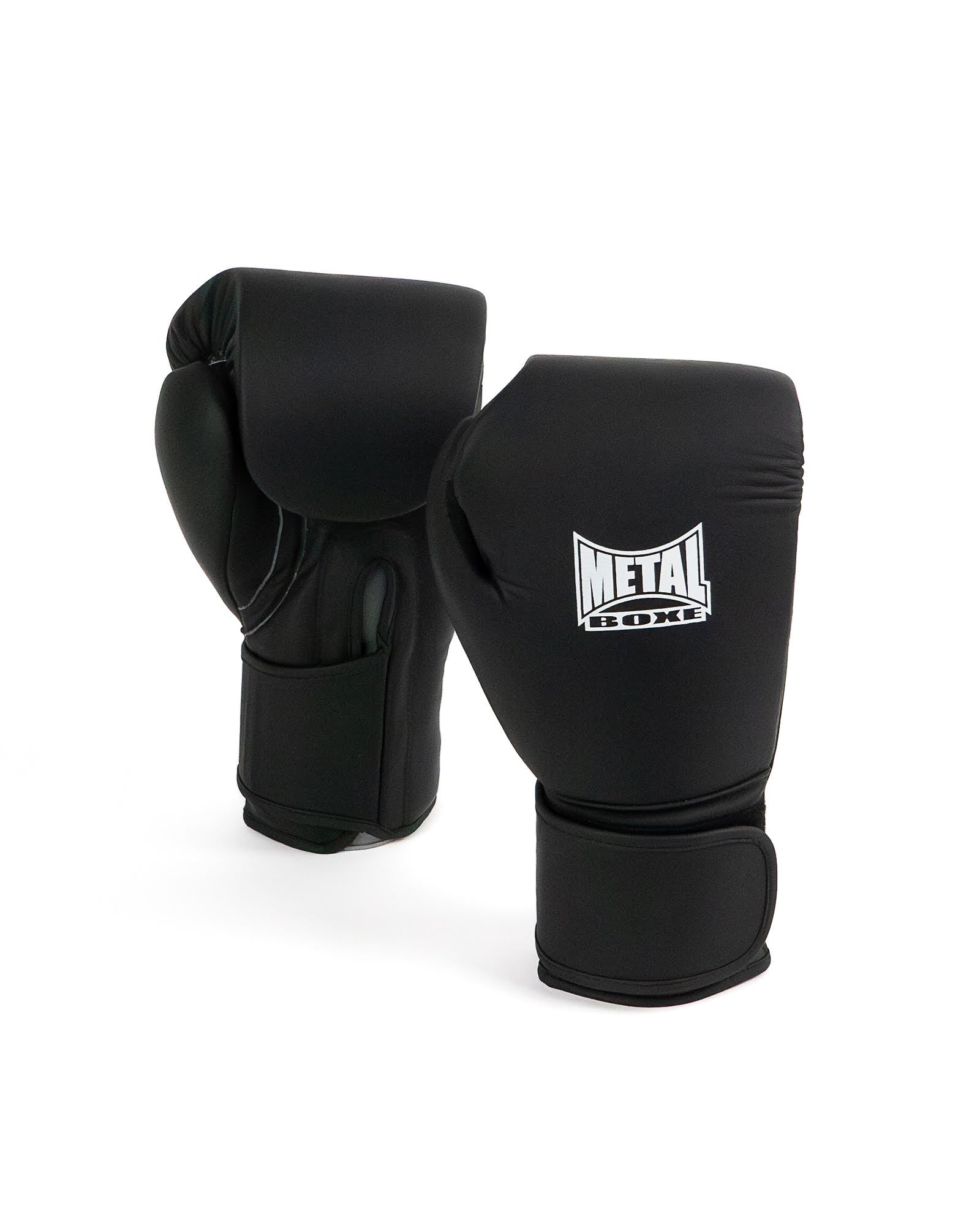
An experienced coach adapts training according to the targeted division. They do not prepare a tactical welterweight the same way as a massive light heavyweight. One works on cardio endurance, the other on explosive strength. Metal Boxe equipment, adapted to each style, allows for the creation of a training environment specific to each body type.
For each style, the equipment must follow: fast boxers will prefer light and flexible boxing gloves, while the more powerful will opt for professional boxing gloves to maximize impact and protection.

Changing your category: strategic choice or common mistake
Changing weight category can change a career. Moving up allows you to face new opponents, avoid dietary sacrifices, and progress without physical limitations. Moving down sometimes offers a size advantage, but carries risks: loss of endurance, physical weakening, lack of reactivity.
Champions like Roy Jones Jr. have won titles in several divisions, becoming benchmarks for this flexibility. But poorly managed, this transition can ruin a career. The upper limit does not forgive. A fighter who is too heavy or too lean loses efficiency. Hence the importance of personalized support: nutrition, sparring, medical follow-up. The boxing club plays a fundamental role here.
The weigh-in: a pivotal moment before every fight
The official weigh-in takes place the day before the fight. That is where everything is decided. The boxer must make the exact weight of their category, without exceeding it. An error of 500 grams can disqualify them or deprive them of the belt.
Some use aggressive methods: fasting, sauna, dehydration. Others maintain their fighting weight all year with a suitable diet. The real challenge consists in rehydrating correctly after the weigh-in without losing speed or cardio. It is a technical and mental challenge as much as a mandatory step.
What each category offers in terms of spectacle
Lightweights often provide the most dynamic fights, with a very high volume of punches. The super middleweights or light heavyweights mix strength and strategy. The heavyweights, meanwhile, often generate memorable KOs.
Each weight division has seen the birth of iconic world champions:
- Muhammad Ali and Mike Tyson in heavyweight.
- Sugar Ray Leonard in welterweight.
- Manny Pacquiao in eight categories.
- Vasyl Lomachenko in featherweight and super featherweight.
Each name has become synonymous with style, determination, and technique. Their careers show how the category can forge a fighter's identity.

The category as a tool for a fighter's evolution
The pro weight category acts as a progression guide. A young boxer often starts in a lower category, then evolves according to their body type. They can move from bantamweight to super lightweight, then aim for welterweight as they mature. Each step marks an increase in power, but also requires relearning, adjusting strategy and training.
Boxing is a living sport, where physical evolution transforms the fighting style. The role of the coach, the club, and the equipment used becomes decisive in managing these transitions.
How to choose your weight category
You do not choose a category by instinct. You measure it, test it, and evaluate it. The right choice depends on:
- height
- bone density
- speed
- maximum strength
- recovery pace
A slow boxer in the lightweights can become very dangerous in super featherweight. An explosive but small fighter in super heavyweight will be overwhelmed by the physical dimension of their opponents. The right placement is found in physical consistency, not in pure ambition.
Why understanding the weight classification allows you to box better
Knowing the weight categories helps create a realistic strategy. It avoids preparation mistakes, provides benchmarks for setting goals, identifying rivals, and above all, adapting your fighting style. The name of the category becomes an identity, almost a status, in the world of boxing.
Mastering this subject is not reserved for pros. Every amateur boxer, every coach, every enthusiast should know this classification. It structures the sport, shapes careers, and determines the legendary fights of tomorrow.
FORGING CHAMPS.