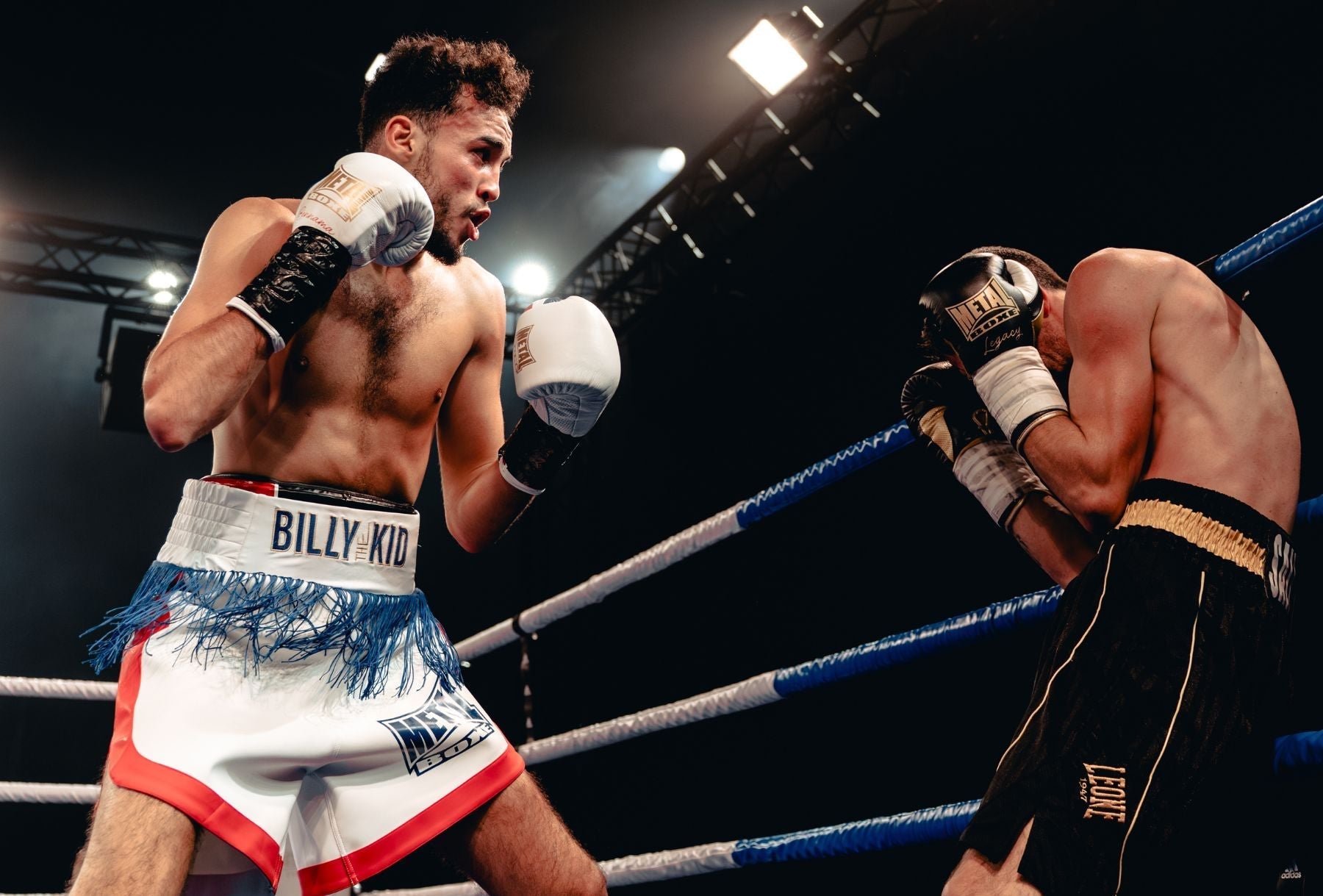

How to improve your boxing guard and dominate your fights?
Guarding in boxing is the first barrier between a boxer and their opponent. It is not just a fixed posture; it is a body organization that dictates how one protects, punches, and reacts. In all combat sports, from English boxing to French savate boxing, including kickboxing or Muay Thai, the guard is a fundamental skill that every practitioner must master. It determines safety, visibility, and the ability to maintain control in every fight. Without a guard, there is no effective defense or structured attack. That is why it is central to teaching in all clubs and remains a benchmark for fighters worldwide.
Why the guard is the number one rule in boxing
The guard represents the first rule of a fight. It is not just an instruction but a condition of safety. By keeping your hands up, your chin slightly tucked, and your elbows tight against your body, you reduce the sensitive areas exposed to blows. With a boxing helmet, you add extra protection against direct blows to the face. This posture allows you to block or avoid a punch while remaining ready to counter-attack. Great coaches repeat: "The guard protects, the guard allows you to attack, the guard maintains balance." It is your first shield and your first offensive tool. In professional boxing as in amateur boxing, ignoring the guard is a mistake that is immediately paid for.
Different types of guard used in boxing

There are several types of guard, each with its advantages and limitations. The best known is the high guard, where the hands remain close to the face, offering strong protection against punches. Conversely, the low guard allows more freedom of movement and offers better vision but exposes the upper body more. The mixed guard combines one hand high and one hand lower, to vary angles and deceive the opponent. In disciplines like Muay Thai, the arms are raised higher to protect against kicks. In freestyle wrestling or jiu-jitsu, the guard becomes even more adaptable, as it must protect against both standing strikes and ground grappling. Each guard corresponds to a style, a level, and a particular strategy.
Adopting an effective guard position: the basics to know
To adopt a solid guard, you must first work on leg placement. The lead foot is placed slightly forward, and the rear foot remains oriented to allow mobility. The knees are bent, and the body weight is balanced. The fists are positioned near the face: the lead hand ready to strike, the rear hand protecting the chin. To strengthen your wrists and prevent injuries, the use of boxing hand wraps is essential. The elbows are tight, and the chin is tucked in.
This position seems simple but requires constant practice to become natural. Practiced hundreds of times, it becomes second nature. Beginners must understand that the guard is not just a static attitude but a constant movement that adapts to each assault. An effective guard is above all a living guard.
Advantages and limitations of high and low guards in boxing
The high guard effectively protects the face and upper body. It allows you to take punches without feeling the full force of the opponent's blows. But it quickly fatigues the shoulder muscles and can reduce visibility. The low guard, on the other hand, offers a better view of the opponent's field and allows for easier counter-attacks. However, it exposes the face and requires quick reflexes to avoid blows. Boxers sometimes alternate between the two depending on the distance, their style, and how the opponent attacks. The choice also depends on the level of security desired. Maintaining the guard, whether high or low, is always the priority.
Common mistakes to avoid when working on your guard
Many beginner boxers make the same mistakes when working on their guard. And every mistake has direct consequences in a fight.
- Flaring the elbows: this leaves an opening in the body and exposes the liver to strikes.
- Raising the arms too high: this causes unnecessary fatigue, reduces mobility, and leaves the body unprotected.
- Dropping the hands after an attack: classic among novices, who forget to bring their fists back after a strike.
- Remaining static: a motionless guard becomes predictable. Movement must remain constant, with small adjustments to avoid assaults.
- Poor foot placement: if the feet are not properly spread or oriented, the guard loses all effectiveness, as the boxer can no longer react.
A good coach immediately corrects these faults. He always reminds that the guard must be maintained, regardless of fatigue, intensity, or the opponent's assault.
Strengthening your guard daily through training

A good guard is never acquired. It must be strengthened in training through specific exercises. The muscles of the shoulders, arms, and torso must maintain the posture over time. The use of boxing inner gloves improves comfort and reduces fatigue during long sessions. The boxer must learn to keep their gloves up, chin tucked, and elbows close to the body, even when fatigue sets in.
The simplest work involves shadow boxing with a constant guard. Every movement must be executed while keeping the fists at face height. Exercises with elastic bands or medicine balls strengthen shoulder power and help maintain a compact guard.
On the punching bag, you can test your endurance by working in long sets. Ten two-minute rounds with a high guard, without ever dropping your arms. This seems simple, but physical condition is quickly put to the test. The stronger the guard in training, the more it will hold up in a real fight.
Clinch work, with repeated assaults from partners, also forces you to stay compact. Repeated impacts teach the boxer to absorb blows while maintaining posture. This is a realistic way to test the guard before entering the ring.
Practical exercises to improve and consolidate your guard
Improving your boxing guard involves a mix of technical exercises and physical work. Here are some effective routines, used in clubs and by professionals:
- Low rope drill: you move under a stretched rope, keeping your hands up. This accustoms you to maintaining posture while moving your head and feet.
- Pad work with imposed guard: the coach throws strikes during combinations. You must block, avoid, and return to guard instantly.
- Mirror exercise: facing a partner, you imitate their movements while maintaining the same guard. This improves mobility while remaining compact.
- Static rounds: keep your arms raised without striking for an entire minute. The goal is to strengthen stabilizing muscles.
- Moving bag work: with a suspended bag that swings, you learn to reposition yourself without ever dropping your guard.
These exercises must be integrated into every session. It's not an option; it's a foundation. The greatest fighters still constantly work on their guard, as it can make the difference between a perfect defense and a suffered KO.
Choosing your guard based on your style and discipline
Every fighter must choose a guard adapted to their style, physique, and discipline. There is no universal recipe, but clear guidelines.
A powerful boxer, who likes to throw a heavy punch with the rear arm, will often prefer the orthodox guard, which is more stable and safer. A southpaw, on the other hand, can disorient opponents by using the southpaw guard, which completely changes the angles of attack.
A stylist, fast and agile, can adopt a low guard to favor mobility and counter-attacks. Conversely, a boxer who relies on protection and the ability to take punches will have every interest in working on a very tight high guard.
In kickboxing or Muay Thai, the choice of guard must take into account kicks. The forearms must be positioned to block circular strikes, while the lead leg must be ready to counter a front kick. In French savate boxing or cane fighting, the guard also integrates defense against long leg or weapon strikes.
The advantage of an adapted guard is twofold: it protects the body and head, but it also allows you to express your own style in combat. The best choice always depends on the boxer, their build, and their way of attacking or defending.