How many rounds in boxing: understanding the duration of a fight in detail
It only takes one round. Just one. For a boxing match to turn, for a boxer to impose their style, for the public to remember a name. But behind this word lies a format, a rhythm, a precise rule, forged by the history of boxing and adapted according to the type of boxing practiced. Amateur, professional, Olympic, or savate, each discipline has its variations. How many rounds does a match last? Why does this number vary? What is the actual duration of a fight, including breaks? We'll break down each parameter, like a glove after training, to give you a clear vision of what "doing your rounds" means.
How many rounds in professional boxing and their duration
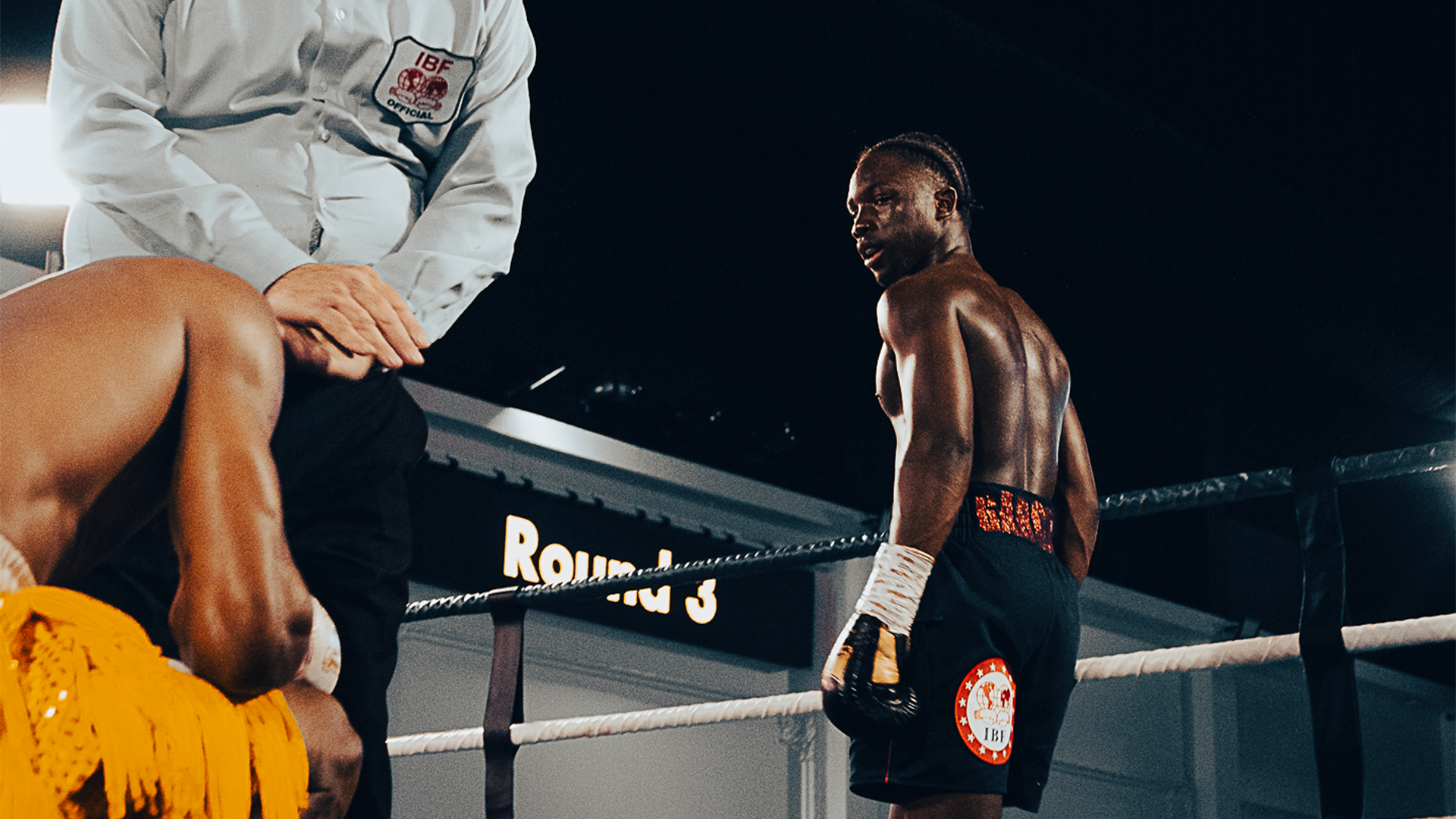
In professional English boxing, the standard format is 12 rounds of 3 minutes each. This is the format used for world championships, fights for a WBC, IBF, WBA, or WBO world title. This structure applies to all weight categories: from lightweight to heavyweight.
At the end of each round, the boxer returns to their corner for a 1-minute break. This minute isn't just for catching breath. It allows the coach to give instructions, correct the guard, adjust strategy, and check for any injuries. It's a tactical regrouping as much as a physical recovery period.
A professional 12-round fight, including breaks, therefore lasts a total of 47 minutes. This format tests physical condition, mental strength, and the ability to maintain constant intensity while reading the opponent's game. There's no room for improvisation. The slightest mistake in the ninth round can weigh heavily on the judge's decision in the twelfth.

How many rounds for a beginner boxer
Not all fights last 12 rounds. A boxer starting out, even in the professional circuit, often begins with shorter formats: 4 rounds, 6 rounds, sometimes 8 rounds. These formats allow for evaluating a fighter's potential without overly exposing their health. It's also a way to build progressive experience, to learn to manage a fight, and to adapt one's rhythm according to the opponent's response.
The boxer must understand how to attack without getting winded, how to protect their weaknesses, how to avoid direct blows, and how to read feints. These short fights are fast, intense, often decisive from the first round.
When starting out, good equipment makes all the difference. Well-padded training boxing gloves and comfortable boxing shorts allow you to concentrate on your technique without discomfort and conserve energy.
The increase in the number of rounds depends on results, the ability to take punches, the displayed intensity, and the ability to finish or go the distance. No room for slowing down. In a 4-round fight, every minute counts. And sometimes, a single circular punch can be enough to turn the tide.
How many rounds in Olympic and amateur boxing
In amateur boxing, as in the Olympic Games, the most frequent format is 3 rounds of 3 minutes for men, and 4 rounds of 2 minutes for women, although some federations apply different durations.
The emphasis is on execution speed, technical precision, tactical defense rather than brute power. The goal is not to knock down, but to score by adhering to the rules. Fights are often decided on points, with precise scoring of allowed touches. It's about outwitting the opponent, not breaking them.
The pace is high, the combinations short. You have to chain blows, score, dodge, and move again. A real work of precision, under pressure. Boxers must demonstrate great cardio, constant positioning, and mastery of timing.
The Olympic format, though shorter, forgives no errors. The slightest drop in guard, one step too many, a misreading of the opponent's arm... And a draw becomes a narrow defeat.
How many rounds for a women's boxing match
Women's boxing follows a slightly different format depending on the federations. In amateur boxing, female boxers often compete in 4 rounds of 2 minutes. In professional boxing, there are generally 10 rounds of 2 minutes, except in world championships where the 10-round format is still preferred, without reaching the male 12 rounds.
But reducing the round duration does not mean reducing the intensity of the fight. Quite the opposite. This structure imposes a denser rhythm, less time to observe, more pressure in each sequence. A female boxer must score points quickly, impose her style, and show her dominance.
Clinching is more frequent, blows must be clear, visible, and effective. Women's combat requires quick reading and constant anticipation. You can't wait until the 5th round to start dominating. Everything is decided from the beginning.
It's better to anticipate with appropriate women's boxing protective gear, a specific groin guard, and lightweight gloves, to maintain full mobility without sacrificing safety.

How many rounds in Thai boxing and Muay Thai
In Thai boxing and Muay Thai, the classic structure is 5 rounds of 3 minutes, with 2 minutes of rest between each round. But beyond the simple duration, it's the internal logic of the fight that changes.
The first two rounds are often used for observation, to get a feel for the opponent. The blows are less forceful, sometimes more symbolic. It's only from the 3rd round that the intensity explodes, combinations become more aggressive, and strategy takes shape.
You see front kicks, high kicks, elbows, knees, sweeps. The foot, the arm, the whole body are used. The fight is total.
This implies the use of protections such as shin guards, ankle guards, and reinforced helmets. The equipment must keep up with the pace without ever failing.
Judging is not based solely on blows landed, but on mastery, attitude, and control of the ring. The round is not just a unit of time, but a stage where the art of combat is expressed.
How many rounds in French boxing and savate according to level
In French boxing, also called savate, the structure varies according to the skill categories:
– 2 or 3 rounds of 1m30 to 2min for beginners in clubs,
– 4 to 5 rounds of 2min for national championships,
– Up to 5 rounds of 3min for international championships.
This sport of French origin, known for its technicality, requires the use of feet as well as fists. Each round becomes a strategic choreography, where the opponent's action must be anticipated, countered, and punished.
The boxing style differs: high guard, front foot management, lateral evasion, torso deflection, frequent use of the circular kick to destabilize the opponent. Here, each round imposes a strict technical framework, with very precise officiating.

When a fight stops before the end of the rounds
A boxing match doesn't always go to the last round. It can stop for various reasons:
– KO: a blow that prevents the opponent from getting up.
– TKO: referee stoppage, often to prevent a concussion.
– Retirement: voluntary stoppage by the corner or the boxer.
– Technical decision: if the fight must stop due to injury before 4 rounds, the cumulative points are referred to.
– Disqualification: illegal blow, serious foul, dangerous action.
The actual duration of a fight therefore depends as much on physical preparation as on the match scenario. A well-placed short direct punch in the 2nd round can collapse a 6-month training camp strategy.
Why boxing is conducted in rounds today
The round system has not always existed. Before the implementation of the Marquess of Queensberry rules in the 19th century, fights were conducted without time limits, until abandonment or incapacity. Some bouts lasted more than 70 rounds, like the one between Andy Bowen and Jack Burke in 1893. 110 rounds. More than 7 hours of fighting. No winner.
It was to control these excesses that federations introduced limited formats, with breaks, precise durations, and official judges. The goal: to preserve health, allow for a fairer evaluation, and integrate boxing into a sporting logic, not just a spectacular one.
Today, every league, every boxing club, every competition relies on these codified rules. They vary according to organizations, but all obey a common logic: to guarantee safety, clarity, and the sporting value of the confrontation.
FORGING CHAMPS.