How many rounds in MMA: everything you need to know about fight length and format
MMA is a complete, raw, and technical combat sport. It combines boxing, Muay Thai, Brazilian Jiu-Jitsu, Judo, wrestling, and many other disciplines in a single confrontation. But when one starts to take an interest in it, a question systematically arises: how many rounds in MMA? The answer is not as simple as a number thrown out offhand. It depends on the type of fight, the level of the fighters, the organization, and the stakes. Amateur or professional fight, preliminary card or main event, title on the line or not… each case has its own rules. In this article, we break down everything: the number of rounds, their duration, the break between each round, the scoring system, the differences between the UFC, Bellator, or ONE Championship, and the history of the rules that shaped modern MMA. Enough to watch a fight with a fresh eye.
How many rounds in MMA for a standard professional fight
In major MMA organizations worldwide, the standard format is clear: 3 rounds of 5 minutes each, with 1 minute of rest between each round. This format applies to the majority of professional fights, whether in the UFC, Bellator MMA, PFL, or KSW. It concerns all bouts on the preliminary card (early prelims and prelims), regular main card fights, and most professional debuts for MMA fighters. The total duration of a standard fight can therefore reach 15 minutes of actual fighting time (excluding breaks), or 17 minutes in total if we include the two minutes of rest. In practice, many fights do not go the distance. A KO, a TKO, a submission, or a corner stoppage can end the bout at any time, sometimes within the first few seconds. The record for the shortest fight in modern MMA? 1 second and 13 hundredths, at WCMMA14 in 2014, between Mike Garrett and Sam Heron. A high-kick to the jaw, and it was over. Every round, it's life.
How many rounds in MMA for a championship fight
When a belt is on the line, the format changes. Championship fights consist of 5 rounds of 5 minutes, for a total duration of 25 minutes of actual fighting. It's the ultimate test of endurance, technique, and strategy. A fighter aiming for a championship title must prove they can go the distance. Five rounds are a different world. Cardio, energy management, tactical adjustments between rounds… everything takes on a different dimension. In the UFC, since 2012, the main event (the main fight of the evening) also takes place over 5 rounds, even when no belt is at stake. Dana White implemented this rule to offer more spectacle and suspense to the public. The reasoning is logical: the most anticipated fight of the evening deserves a format commensurate with its importance. UFC Fight Nights follow the same logic. And when we talk about 5-round fights, we are also talking about fighters capable of striking, wrestling, submitting, and taking punishment for 25 relentless minutes. This is where true champions reveal themselves.
Why an MMA round lasts 5 minutes

The duration of an MMA round was not chosen at random. It corresponds to the very nature of this combat sport. Unlike boxing where each round lasts 3 minutes and focuses on punches, MMA encompasses multiple disciplines: strikes, takedowns, ground fighting, ground and pound, chokes, joint locks. It takes time for these different phases of combat to unfold. Five minutes allow a fighter to apply their fighting style, attempt takedowns, work in clinch range, seek a submission, or land significant strikes with fists, feet, elbows, or knees. With 3-minute rounds, many sequences would be interrupted before reaching a conclusion, which would penalize grapplers and ground specialists. The 5-minute format ensures a balance between striking and ground fighting techniques, between strikers and wrestlers. This is what makes MMA so comprehensive and unpredictable.
How many rounds in amateur MMA
Amateur combat follows a different format, designed to protect less experienced fighters. Generally, amateur fights consist of 3 rounds of 3 minutes, still with 1 minute of rest between each round. The total duration of an amateur fight therefore does not exceed 9 minutes of effective time. In France, the FMMAF (French MMA Federation), affiliated with the French Boxing Federation, regulates the practice. The youth and amateur sports code is based on the rules of the IMMAF (International Mixed Martial Arts Federation). Beyond the reduced duration, safety rules are reinforced for amateurs. Certain techniques are prohibited: no elbow strikes, no knees to the head, no heel hooks. The wearing of additional protective gear (helmet, shin guards) is mandatory. The idea is to provide a progressive framework. An amateur fighter learns to manage distance, rhythm, and the opponent, without being exposed to the same intensity as a professional. This is the first step before moving to Elite 2, then Elite 1, according to the French federation's classification.
How an MMA fight unfolds round by round
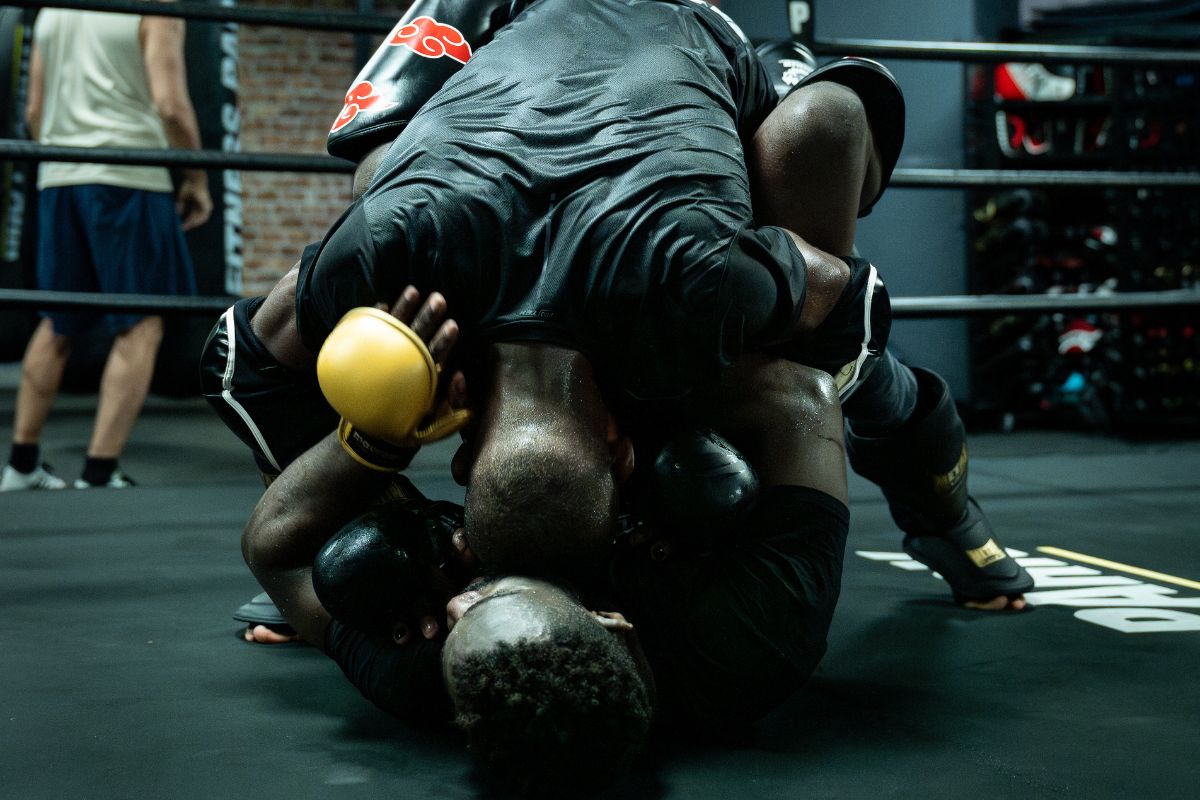
An MMA fight follows a codified process. Before the first round, both fighters enter the octagon (or cage, depending on the organization). The referee reminds them of the fight rules, checks their equipment (4 oz MMA gloves for professionals, MMA cup, mouthguard), and starts the fight at the signal. Each 5-minute round begins standing. Fighters can strike with fists, feet, elbows, and knees (except prohibited techniques). They can also grab the opponent, take them to the ground, work in a dominant position, or seek a submission via choke or joint lock. At the end of each round, an audible signal sounds. Fighters return to their corner for a 1-minute break. This is when the coach intervenes: tactical adjustment, hydration, treatment of any cuts. Then the next round begins. If the fight goes the distance (3 or 5 rounds depending on the format), the judges render their decision. If a KO, TKO, submission, or medical stoppage occurs before the end, the fight stops immediately. The referee is the only one who can decide on a stoppage during a round. They can also deduct points for fouls (illegal strike, eye poke, low blow).
The scoring system: how judges score each round
MMA uses the 10-point must system, directly borrowed from boxing. Three judges are positioned around the fighting area. In each round, they assign a score to each fighter. The winner of the round receives 10 points, the loser 9 or less depending on the degree of domination. A score of 10-9 indicates a close round, won by a narrow margin. A 10-8 reflects clear domination (knockdown, long sequence of ground and pound, submission attempt close to completion). A 10-7 is extremely rare and signifies total outclassing. The judging criteria follow a precise order of priority: effectiveness of strikes and grappling first, then aggressiveness, then cage control. At the end of the fight, the scores are added up. For a 3-round fight, the maximum is 30 points. In 5 rounds, it increases to 50 points. The winner of the fight is determined by unanimous decision (all three judges agree), by majority decision (two judges agree, the third gives a draw), or by split decision (two judges for one fighter, one for the other). The system has its limitations. Unlike boxing (12 rounds of 3 minutes), MMA only offers 3 or 5 rounds to separate fighters. A misjudgment by a judge carries much more weight. This is a recurring debate in the world of MMA.
The different ways to win a fight before the end of the rounds

Many fights do not go to the judges' decision. And that is the beauty of MMA. The possibilities for victory before the limit are numerous. A KO (knockout) occurs when a fighter loses consciousness following a strike. This is the most spectacular outcome, the one that electrifies venues. A TKO (technical knockout) occurs when the referee determines that a fighter is no longer in a state to defend themselves, even if they are still conscious. A flurry of unanswered blows, a deep cut, an inability to get back up… the referee protects the fighter. Submission is the DNA of MMA, inherited from Brazilian Jiu-Jitsu and the Gracie family. The fighter taps (on the ground or on the opponent) to signal that they are giving up due to a choke or a joint lock. There is also the corner stoppage, when the coach throws in the towel to protect their fighter. And disqualification, in case of repeated or intentional illegal strikes (strike to the back of the head, to the spine, to the groin, biting). Each fight can turn in a fraction of a second. That's why you never take your eyes off the screen.
The history of rounds in MMA: from no-holds-barred to the current format
The current format is the result of a long evolution. In the early days of the UFC, in November 1993 in Denver, there was no time limit, no rounds, and no weight classes. The concept was raw: a tournament where fighters from different disciplines clashed in a cage, with almost no rules. Royce Gracie, representing Brazilian Jiu-Jitsu, demonstrated the power of ground fighting against much heavier opponents. Fights lasted as long as necessary. At UFC III, a 273 kg sumo wrestler could face a 91 kg karateka, with no maximum duration. The legacy of Brazilian vale tudo and ancient pankration. Faced with criticism and political pressure (Senator John McCain called MMA "human cockfighting"), the UFC had to evolve. In 1995, for UFC V, an initial time limit of 30 minutes was introduced, but without judges. The fight between Ken Shamrock and Royce Gracie ended in a draw, which angered the public. Judges were added from the following event. The real turning point came in September 2000, when the New Jersey Athletic Commission established the Unified Rules of Mixed Martial Arts: 5-minute rounds, 4 oz gloves, weight classes, 31 listed fouls. These MMA rules were officially adopted in 2003 and became the global standard. MMA transitioned from unstructured no-holds-barred fighting to a structured and regulated sport. And it is this structure that allowed its explosion throughout the world.
How many rounds in MMA depending on the organizations
While major MMA organizations share the same core set of rules, some differences exist. In the Ultimate Fighting Championship, the format is set: 3 rounds of 5 minutes for standard fights, 5 rounds of 5 minutes for championship fights and main events. Bellator MMA follows exactly the same pattern. The PFL (Professional Fighters League) also applies this format, with the peculiarity of a season system including playoffs and a one-million-dollar prize for the champion of each weight class. The ONE Championship, based in Asia, follows the same basics, but may adjust the duration for certain non-title fights (sometimes 3 rounds of 3 minutes depending on categories and local regulations). Rizin, in Japan, also offers variations depending on its special events. And for amateur fights, each national federation has its own adjustments. In France, the FMMAF oversees everything. The constant, everywhere, is the foundation of the Unified Rules: never more than 5 rounds, never more than 25 minutes of fighting per fighter over a 24-hour period. The fighters' health remains the priority.
How many rounds in MMA compared to boxing and other combat sports
Comparing the number of rounds in MMA with other combat sports helps to better understand the specific nature of the format. In professional boxing, a world title fight is contested over 12 rounds of 3 minutes, which means 36 minutes of actual fighting. In amateur boxing, it's 3 rounds of 3 minutes. In Muay Thai, the standard format is 5 rounds of 3 minutes. In kickboxing, there are 3 to 5 rounds of 3 minutes depending on the organization. In professional MMA, a championship fight represents 25 minutes spread over 5 rounds. Less total time than in pro boxing, but longer rounds (5 minutes versus 3). And above all, a much broader physical condition. In boxing, you manage the fatigue of punches and legs. In MMA, you also manage the ground, takedowns, transitions, clinch work against the cage, and submission attempts. Five minutes of MMA is a constant rhythm with no hidden breaks. No clinching to catch your breath, no count after a knockdown. The referee rarely separates fighters. Every second counts, from the first to the last round.
MMA in France: what format for official competitions
MMA in France was legalized in January 2020 under the impetus of Sports Minister Roxana Maracineanu. The FMMAF, the delegated structure affiliated with the FFBoxe, regulates the practice in the territory. The first major international event organized in France remains UFC Fight Night: Gane vs. Tuivasa, on September 3, 2022, at the Accor Arena in Paris. A historic evening, with tickets sold in record time. For French professional competitions, the formats comply with the Unified Rules: 3 rounds of 5 minutes for standard fights, 5 rounds of 5 minutes for championship fights. The FMMAF classifies fighters into two levels (Elite 1 and Elite 2), with strict pairing rules based on experience and record. An Elite 2 fighter cannot face an opponent with more than 13 professional fights. Weigh-ins take place between 24 and 36 hours before the fight, with a tolerance of 500 grams (no tolerance for title fights). The French sports code lists 28 fouls, the same prohibited strikes as in the rest of the world: strikes to the back of the head, to the spine, to the groin, biting, eye pokes, and many others. The discipline still has everything to build in France, but the framework is solid. And French fighters like Ciryl Gane or Manon Fiorot prove that the level is already there on the world stage.
Choosing your equipment according to the fight format
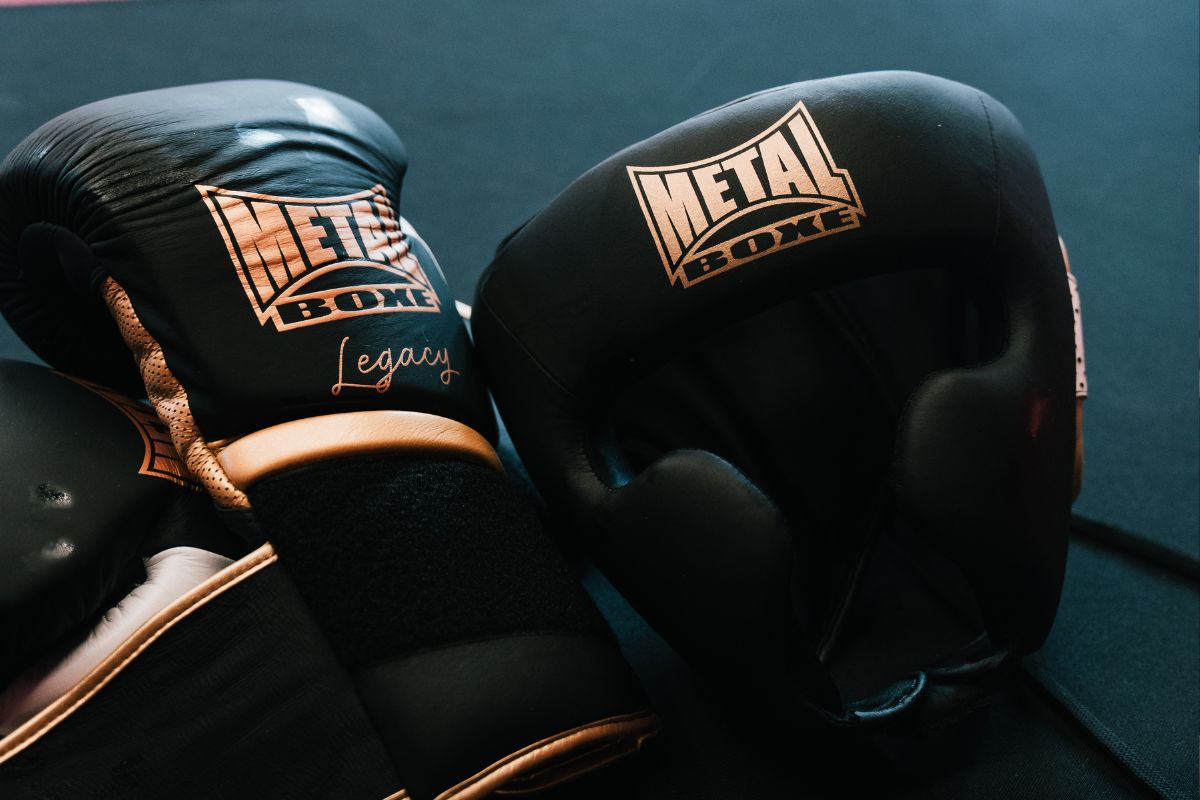
Knowing the number of rounds and their duration is not just a matter of MMA culture. It's also a concrete benchmark for adapting your training and choosing your equipment. In a 3-round fight, the pace is more explosive. You can afford to be more aggressive from the start. Over 5 rounds, energy management becomes crucial. Interval training (5 x 5 minutes with 1 minute rest) simulates real conditions. In sparring, fighters wear 7 oz or larger gloves to protect their joints. In amateur competition, gloves are more padded (7 to 8 oz) than those of professionals (4 to 6 oz), to limit injuries in shorter but intense rounds. At Metal Boxe, each MMA glove model, each MMA shin guard, each cup is designed to support the fighter regardless of the format. Whether you are competing in your first amateur fight of 3 x 3 minutes or aiming for a title in 5 x 5 minutes, the equipment must absorb, resist, and endure. The fight begins long before the octagon. It begins in the gym, with the right gloves on your hands.
FORGING CHAMPS.